
The population around Baynes Sound is growing
The Comox Valley surrounds most of Baynes Sound. With easy access to nature and year-round outdoor activities, it is no surprise that the population has been booming in recent years. The communities of Cumberland and Courtney have been experiencing particularly high growth rates. From 2016 to 2021, Courtney’s population grew by over 10% and Cumberland’s population grew by over 18%. This boom isn’t expected to slow down anytime soon. The Comox Valley, as a whole, is projected to grow another 30% from 2021 to 2041. That’s an increase of over 20,000 people. Check out the Comox Valley Regional District’s Housing Needs Assessment for more information.
Check out the census mapper to see how population growth around Baynes Sound compares to the rest of the country.
More people = more waste
People generate a lot of waste, and waste can pollute the environment. Sources of pollution include sewers, landfills, and runoff when it rains. Planners, engineers, and city managers work to manage waste from all these streams, but pollutants still make it into the ocean. Some examples of pollutants include plastics, heavy metals, and viruses like norovirus.
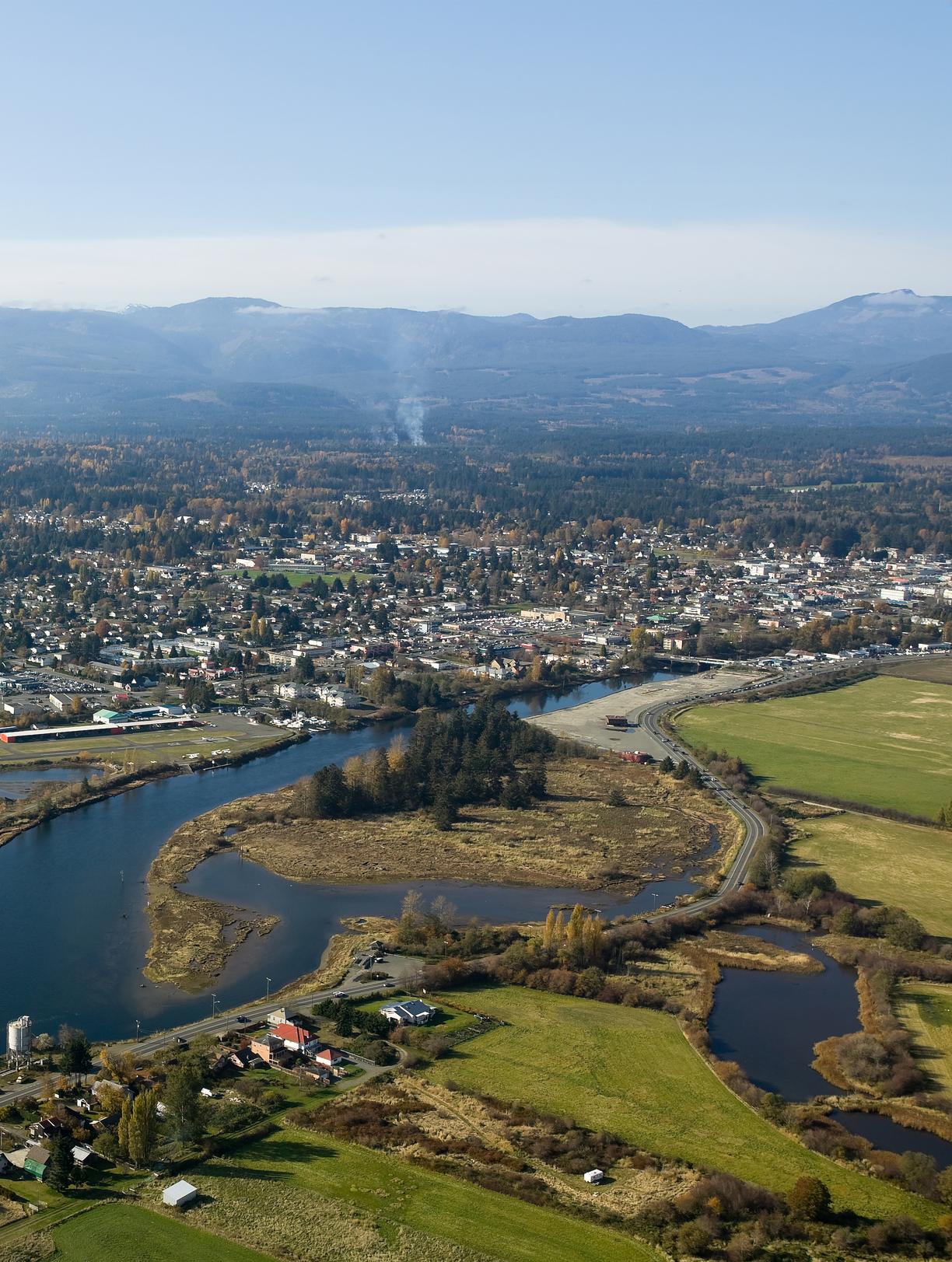
Researchers work to understand how pollutants affect the environment in Baynes Sound.
Check out this video from Ocean Wise to learn about how they are tracking pollution in BC.
Check out the Ocean Wise Pollution Tracker Map to see what contaminants are in Mussels and Sediments around BC.
Contamination research in Baynes Sound
Recently, a review of pollution literature in the Salish Sea was published. The 2025 review study is titled Effects of pollution on ecologically and economically important organisms of the Salish Sea. As the title suggests, this study considers research about the impact of pollution on marine species. The study found research on chemical pollution, biological pollution, marine debris, and sound pollution. The study also reveals that Baynes Sound pollution research is largely about microplastics.
Check out the research paper:
Microplastics
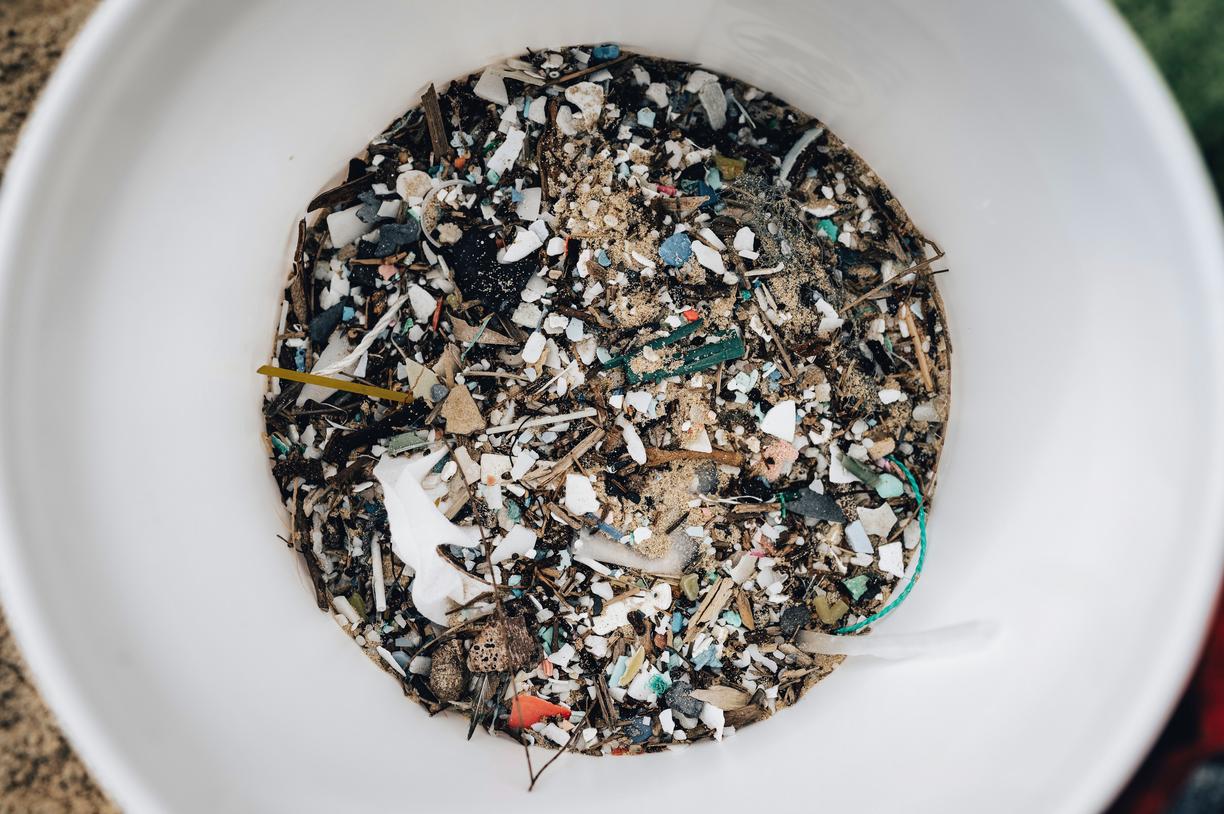
All plastic pollution can cause issues for marine life, but microplastics are of particular concern. Microplastics are tiny pieces of plastic (less than 5mm across). Marine animals eat microplastics when feeding on small organisms, like phytoplankton. Fish, zooplankton (microscopic animals), baleen whales, and shellfish are all at risk. When animals eat plastic and it accumulates in their body over time, it is called bioaccumulation.
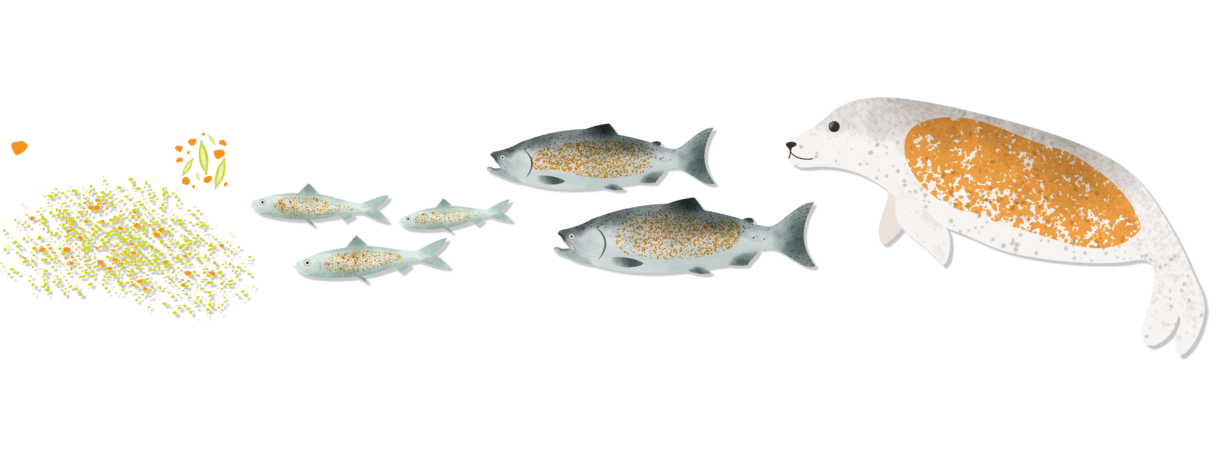
Many of the animals that eat microplastics make up the lower levels of the food chain. When larger animals eat them, the plastics make their way up the food chain and around the food web. Although larger fish and marine animals may not be directly eating microplastics in the water, they can end up with large concentrations in their bodies. This is because of something called biomagnification.
Biomagnification is when the concentration of pollutants becomes magnified as you move up the food chain. Predators end up eating all the microplastics that their prey accumulated in their lifetime. See the diagram below to understand how this causes a magnification effect.
Learn more about the food web on our biodiversity page.
Learn more about microplastics and what you can do to help from this Ocean Wise video
Microplastic research in Baynes Sound
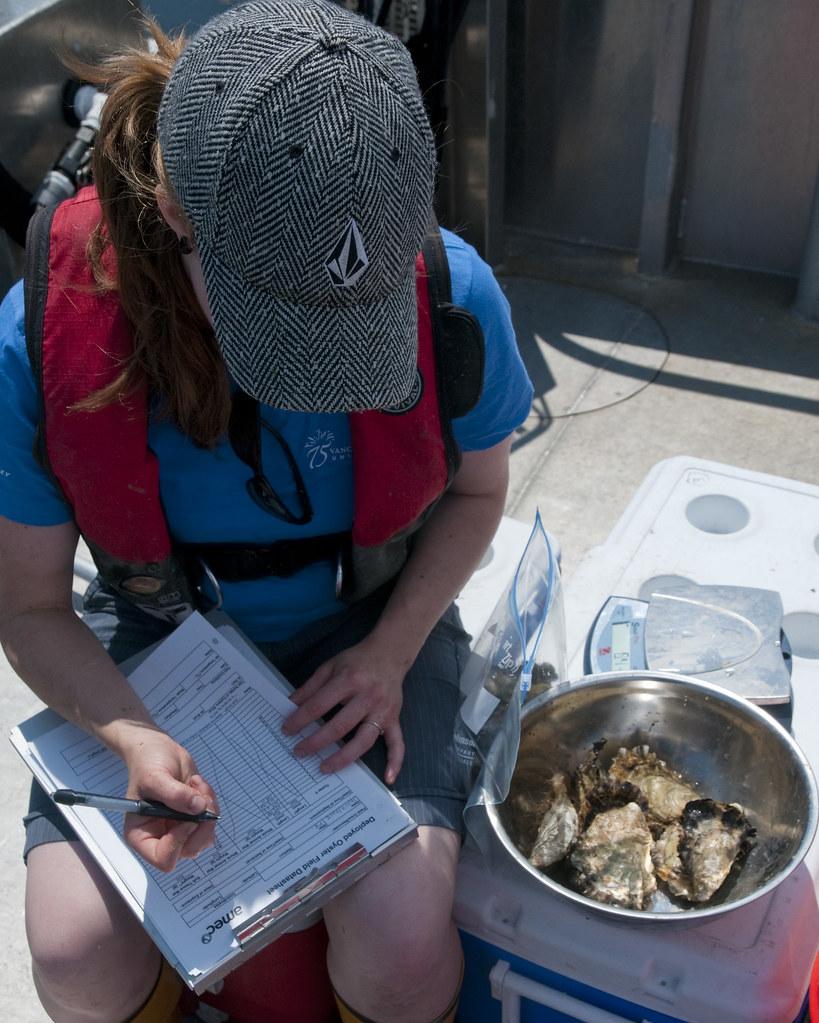
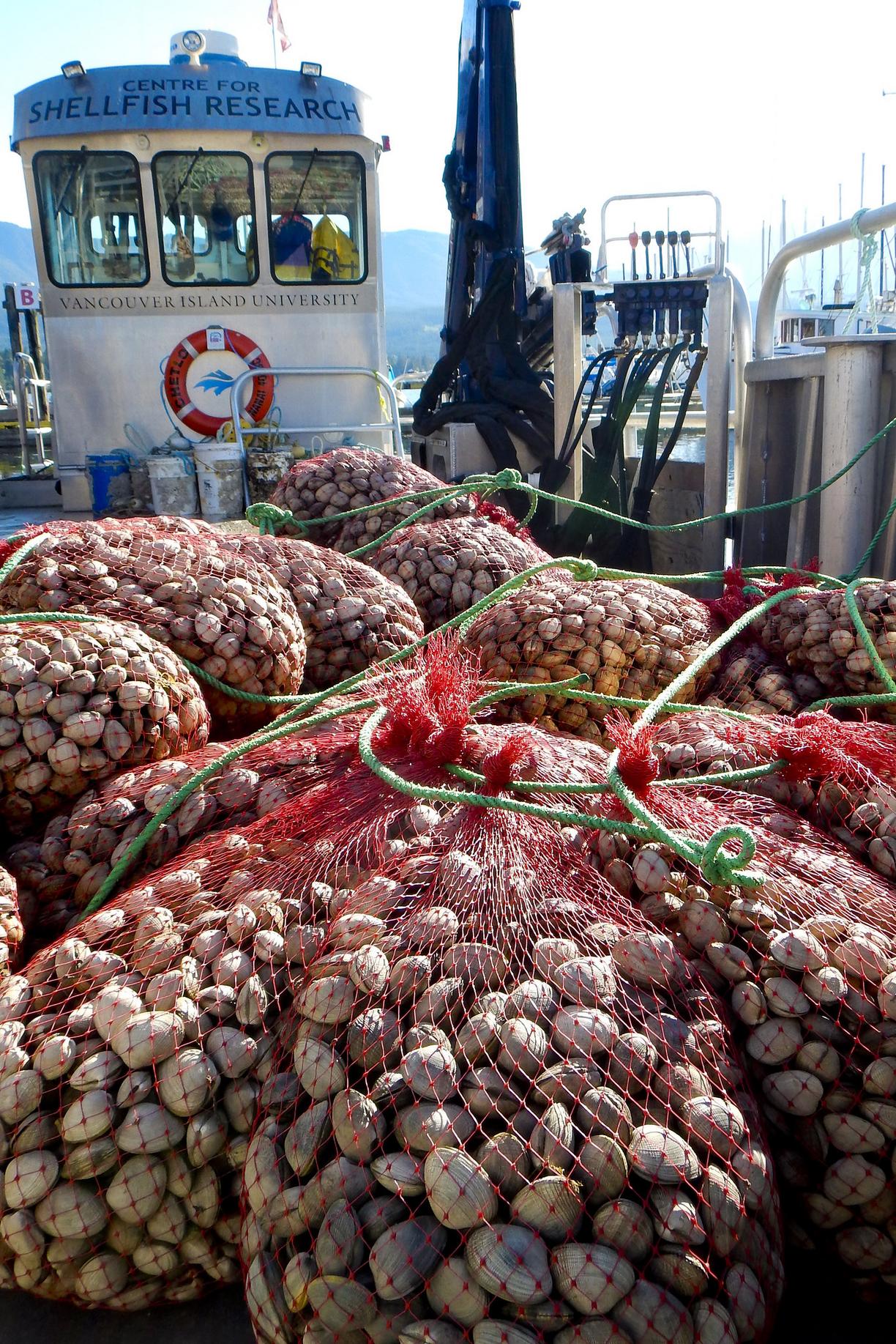
In Baynes Sound, scientists study how microplastics affect shellfish. Understanding microplastics in shellfish is important to understand the effects on the many animals that eat them.
In 2016, scientists studied microplastics in Manilla clams around Baynes Sound. The study had two goals: 1) examining the presence of microplastics in general; 2) examining whether farmed clams contained more microplastics than wild clams.
The study found that microplastics are affecting Manilla clams in Baynes Sound. All the clams studied contained at least one microplastic fiber. Individual clams had between 0.7 and 5.5 plastic particles per gram of clam tissue.
So, microplastics are affecting clams in Baynes Sound, but a question still remains. Is there a difference in microplastic concentration between farmed and wild clams? The scientists predicted that the farmed clams would have more microplastics. This was the prediction because shellfish aquaculture uses a lot of plastic equipment.
In this study, the farmed clams did have more microplastics than the wild clams, but the difference was not significant. This means the results are likely caused by random chance, not plastics from farming.
Check out the research paper:
In 2019, another study looked at whether there are more microplastics in shellfish closer to aquaculture sites. This time, the researchers also looked at microplastics in the environment (water and sediments). Unlike the 2016 study, this research wasn’t specific to Baynes Sound. Rather, Baynes Sound was one of 6 regions studied. Even with these differences, the researchers found similar results to the 2016 study. There weren’t significantly more microplastics in the farmed shellfish or their environment.
Check out the research paper:
These research studies both suggest that shellfish farming is not currently a significant source of microplastic pollution. Does this mean that we shouldn’t worry about plastic pollution from shellfish farming at all? No! Science doesn’t deal in absolutes. Ongoing testing and research are an important part of the scientific process. Because science cannot give definitive answers, it is also important that decision-makers use the precautionary principle. This means taking preventative action, even when there isn’t scientific certainty. In this case, a precautionary approach may include finding alternatives for ropes and anti-predator nets that can release plastic fibers.
Find more papers on microplastic pollution in Baynes Sound in the research papers section.
Norovirus
What is norovirus?
Not all viruses in the ocean are harmful to humans, but some certainly are. Norovirus is one particularly nasty virus that can cause vomiting, diarrhea, and nausea. There is no treatment, but symptoms usually only last a few days. Hospitalization is usually only necessary if dehydration becomes an issue. Learn more on the Government of Canada’s Norovirus page.
What causes outbreaks?
Norovirus outbreaks tend to be attributed to eating raw shellfish, but shellfish aren’t the only food at risk of contamination. People can get norovirus from all kinds of sources, including leafy greens and fresh fruits.
How do shellfish become contaminated?
Norovirus ends up in the ocean when untreated sewage enters waterways. As filter feeders, shellfish can become contaminated as filter the water for food. The virus doesn’t affect the shellfish and there is no visual sign of contamination, so it can be difficult to stop an outbreak before it starts. As soon as contamination is detected, oyster farms need to shut down. This is important to keep people healthy, but it can be damaging to the industry and the farmers’ livelihoods.
How can outbreaks be prevented?
The best way to prevent the spread of disease without negative impacts to the shellfish industry is to deal with it at the source. Good sewage management can go a long way towards reducing outbreaks!
The Comox Valley Regional District is currently working on a Sewer Conveyance Project that will route sewage inland to reduce leakage potential. This will help protect Baynes Sound from contamination! Learn more at engagecomoxvalley.ca.
The BC Shellfish Growers Association has created a Norovirus Committee to help ensure the shellfish industry is able to continue to operate as the region continues to grow. Learn more on the BC Shellfish Growers Association’s website.
Research papers
Axworthy, J. B., Bates, E. H., Grosser, M. P., & Padilla-Gamiño, J. L. (2025). Effects of pollution on ecologically and economically important organisms of the Salish Sea. Marine Pollution Bulletin, 219, 118322.
Baechler, B. R., Stienbarger, C. D., Horn, D. A., Joseph, J., Taylor, A. R., Granek, E. F., & Brander, S. M. (2020). Microplastic occurrence and effects in commercially harvested North American finfish and shellfish: Current knowledge and future directions. Limnology and Oceanography Letters, 5(1), 113–136.
Bendell, L. I., LeCadre, E., & Zhou, W. (2020). Use of sediment dwelling bivalves to biomonitor plastic particle pollution in intertidal regions; A review and study. PloS One, 15(5), e0232879.
Cassis, D., Lekhi, P., Pearce, C. M., Ebell, N., Orians, K., & Maldonado, M. T. (2011). The role of phytoplankton in the modulation of dissolved and oyster cadmium concentrations in Deep Bay, British Columbia, Canada. Science of The Total Environment, 409(20), 4415–4424.
Cluzard, M., Kazmiruk, T. N., Kazmiruk, V. D., & Bendell, L. I. (2015). Intertidal Concentrations of Microplastics and Their Influence on Ammonium Cycling as Related to the Shellfish Industry. Archives of Environmental Contamination and Toxicology, 69(3), 310–319.
Covernton, G. A., Pearce, C. M., Gurney-Smith, H. J., Chastain, S. G., Ross, P. S., Dower, J. F., & Dudas, S. E. (2019). Size and shape matter: A preliminary analysis of microplastic sampling technique in seawater studies with implications for ecological risk assessment. The Science of the Total Environment, 667(Journal Article), 124–132.
Covernton, G., Collicutt, B., Gurney-Smith, H., Pearce, C., Dower, J., Ross, P., & Dudas, S. (2019). Microplastics in bivalves and their habitat in relation to shellfish aquaculture proximity in coastal British Columbia, Canada. Aquaculture Environment Interactions, 11, 357–374.
Davidson, K., & Dudas, S. E. (2016). Microplastic Ingestion by Wild and Cultured Manila Clams (Venerupis philippinarum) from Baynes Sound, British Columbia. Archives of Environmental Contamination and Toxicology, 71(2), 147–156.
Kazmiruk, T. N., Kazmiruk, V. D., & Bendell, L. I. (2018). Abundance and distribution of microplastics within surface sediments of a key shellfish growing region of Canada. PloS One, 13(5), e0196005.
Lekhi, P., Cassis, D., Pearce, C. M., Ebell, N., Maldonado, M. T., & Orians, K. J. (2008). Role of dissolved and particulate cadmium in the accumulation of cadmium in cultured oysters (Crassostrea gigas). Science of The Total Environment, 393(2–3), 309–325.
Meghnath, K., Hasselback, P., McCormick, R., Prystajecky, N., Taylor, M., McIntyre, L., Man, S., Whitfield, Y., Warshawsky, B., McKinley, M., Bitzikos, O., Hexemer, A., & Galanis, E. (2019). Outbreaks of Norovirus and Acute Gastroenteritis Associated with British Columbia Oysters, 2016–2017. Food and Environmental Virology, 11(2), 138–148.
Pouillot, R., Smith, M., Van Doren, J. M., Catford, A., Holtzman, J., Calci, K. R., Edwards, R., Goblick, G., Roberts, C., Stobo, J., White, J., Woods, J., DePaola, A., Buenaventura, E., & Burkhardt, W. (2022). Risk Assessment of Norovirus Illness from Consumption of Raw Oysters in the United States and in Canada. Risk Analysis, 42(2), 344–369.
Widmeyer, J. R., & Bendell-Young, L. I. (2008). Heavy Metal Levels in Suspended Sediments, Crassostrea gigas, and the Risk to Humans. Archives of Environmental Contamination and Toxicology, 55(3), 442–450.