
Meet the Pacific herring
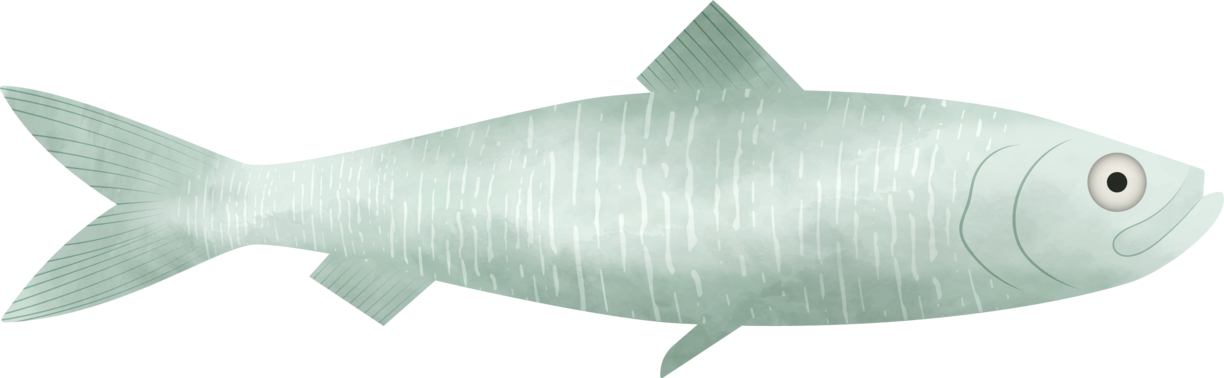
The Pacific herring (or Clupea pallasii if you’re a scientist) is a small silvery fish with a big ecological impact. Pacific herring are incredibly productive. One female herring can lay 100,000 eggs in her lifetime. Unlike Salmon, herring can spawn year after year. That is why they are so abundant. Pacific herring is a keystone species because there are so many of them and they are prey for many different species. These little fish are found along the coast of North America from Baja California to Alaska.
The spring herring spawn
The herring spawn is a special time of year. Every spring, from February to April, the herring migrate to shallow waters to reproduce.
Unlike land animals, many aquatic animals fertilize their eggs externally. This means the eggs are fertilized after they are laid. The female lays her eggs in eelgrass beds or on seaweed, then the male releases his milt into the water. This is an efficient way of fertilizing many eggs at one time. It also causes the water to turn a tropical, milky blue colour.
Herring love to spawn in the shallow waters around Baynes Sound, from Comox all the way to Nanaimo. If you are hoping to witness the bright blue waters of the herring spawn, March is usually when it hits its peak.
During the spawn, there are millions of fish laying billions of eggs in shallow waters. This is like an all-you-can-eat buffet for birds, whales, sea lions, and larger fish. Once the spawn is over, the herring venture back to the open ocean until next year.
Baynes Sound is an Ecologically and Biologically Significant Area, and it’s an Important Bird and Biodiversity Area. The herring spawn is one of the main reasons Baynes Sound has these designations! Learn more on our biodiversity page.
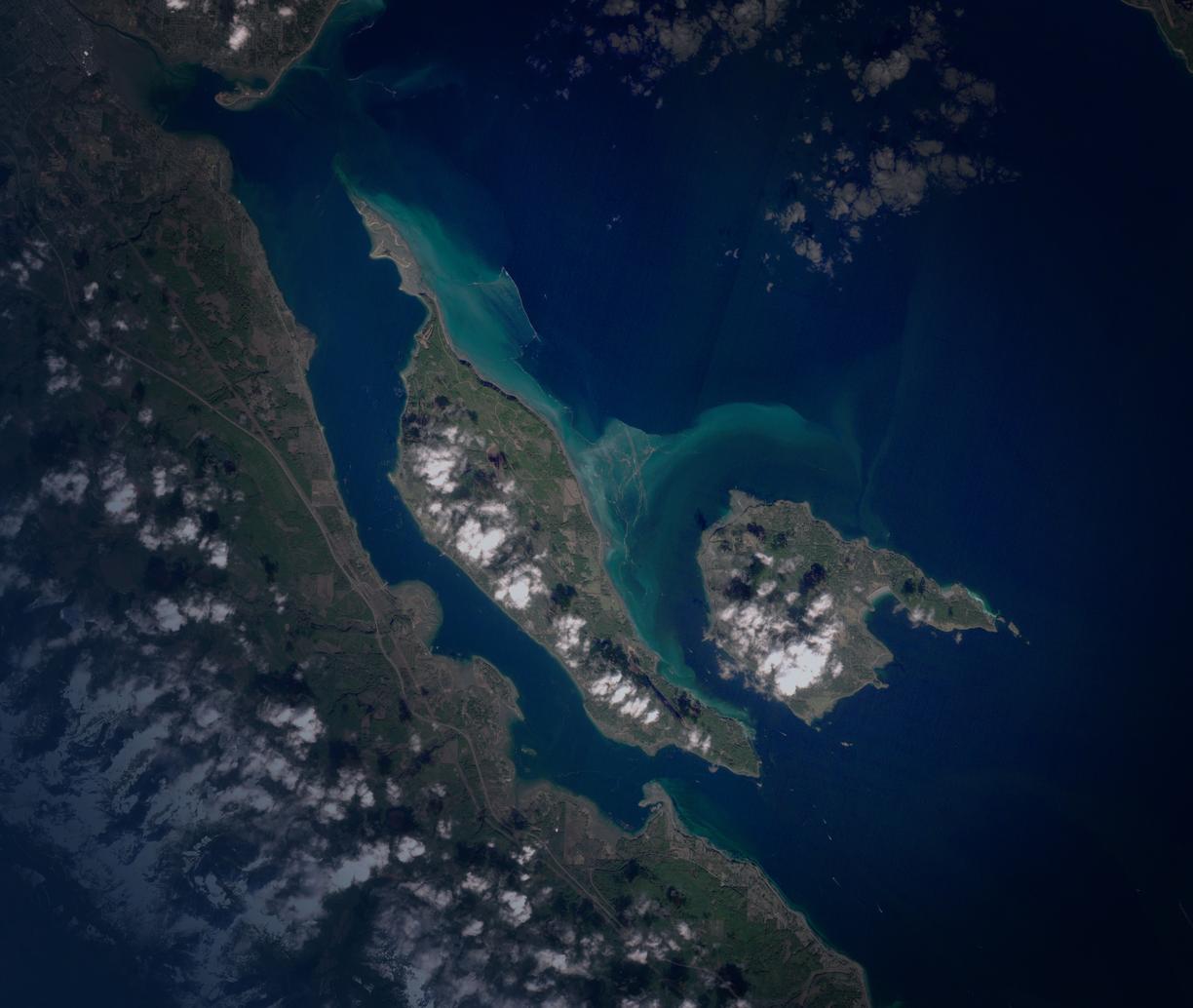
Satellite image from Loïc Dallaire with the Pacific Salmon Foundation
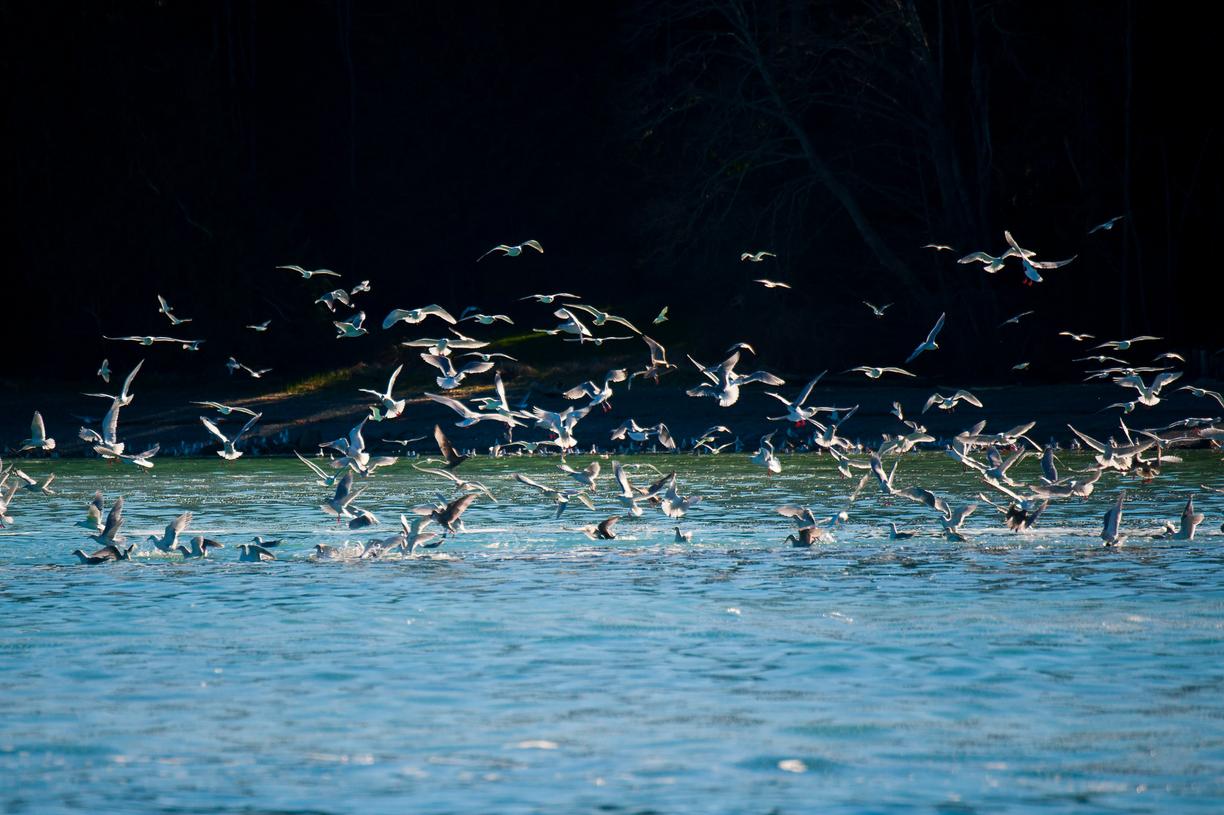
Check out this video from the CBC to learn more about the herring spawn.
Herring research in Baynes Sound
We know that the herring population is declining, but we don't know why. Because herring are such an ecologically valuable species, population decline has implications for other species. For example, herring are an important food source for salmon. Researchers with the Pacific Salmon Foundation are studying changes in herring populations and how these changes impact salmon. Because the herring spawn can be observed in satellite imagery, scientists can map how the spawn has changed over time. Check out these videos from the Pacific Salmon Foundation to learn more about this research.
Research papers
Houtman, N. R., Yakimishyn, J., Collyer, M., Sutherst, J., Robinson, C. L. K., & Costa, M. (2022). Experimentally Determining Optimal Conditions for Mapping Forage Fish with RPAS. Drones (Basel), 6(12), 426.
Lewis’, T. L., Esler, D., & Boyd’, W. S. (2007). Foraging Behaviors of Surf Scoters and White-Winged Scoters during Spawning of Pacific Herring. The Condor, 109(1), 216–222.
Lok, E. K., Kirk, M., Esler, D., & Boyd, W. S. (2008). Movements of Pre-migratory Surf and White-winged Scoters in Response to Pacific Herring Spawn. Waterbirds (De Leon Springs, Fla.), 31(3), 385–393.
McKechnie, I., Lepofsky, D., Moss, M. L., Butler, V. L., Orchard, T. J., Coupland, G., Foster, F., Caldwell, M., & Lertzman, K. (2014). Archaeological data provide alternative hypotheses on Pacific herring (Clupea pallasii) distribution, abundance, and variability. Proceedings of the National Academy of Sciences, 111(9).