
Who would you like to learn about?
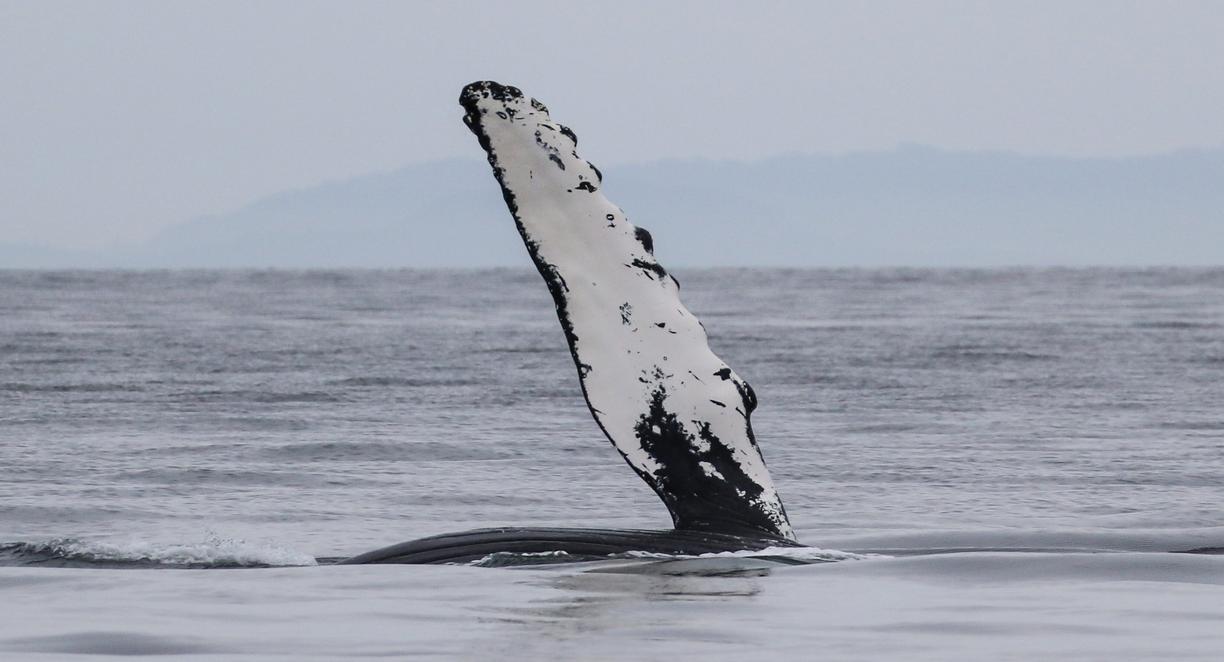
Baleen whales
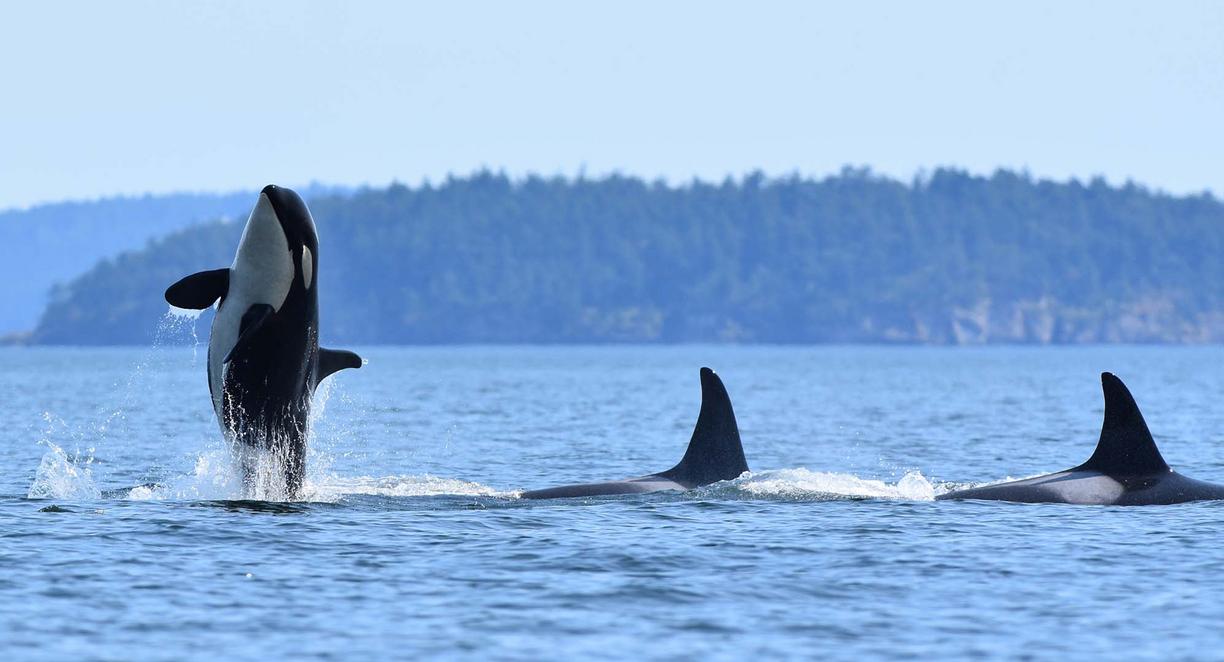
Toothed whales
Humpback whales
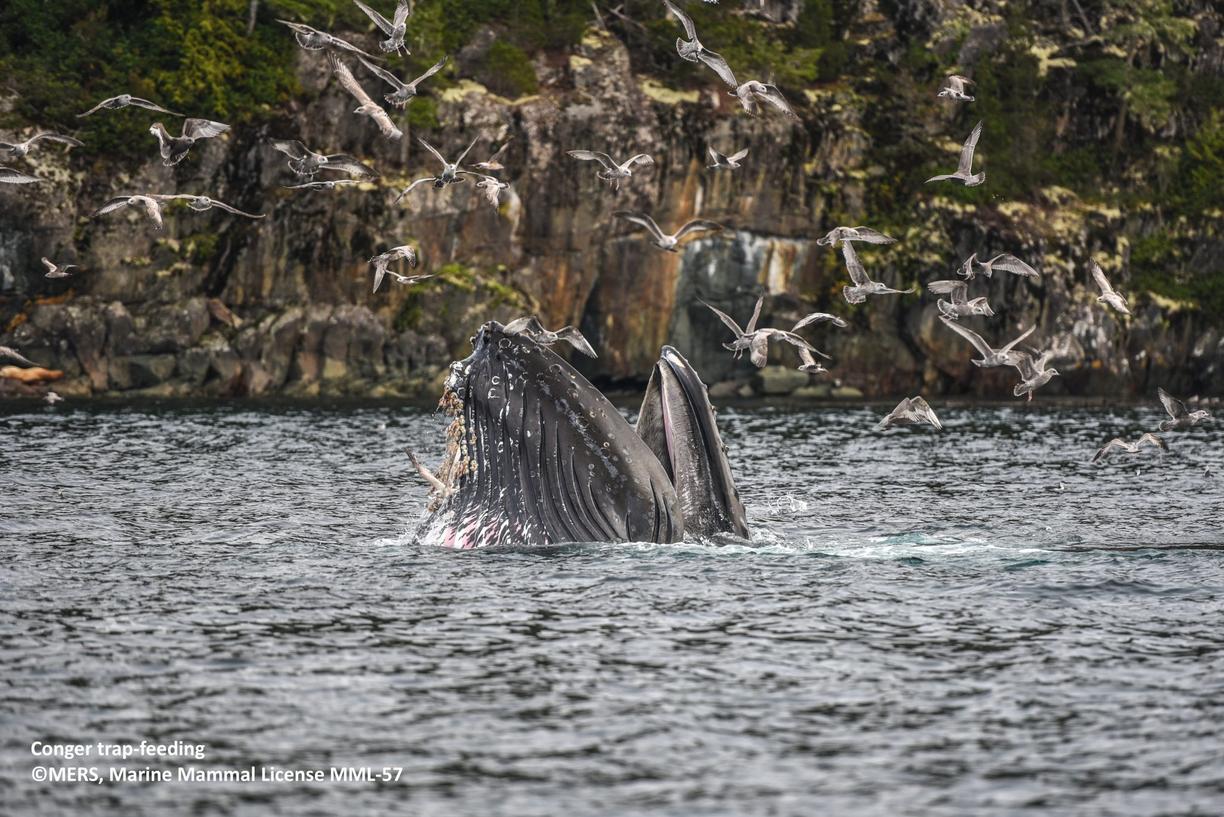
Orcas may be the first whale that comes to mind when you think about the BC coast, but BC’s whale population is more than just Orcas. Humpback whales were historically common in the Salish Sea, but commercial whaling practices left Humpback Whales (and many other large whale species) close to extinction. Humpbacks were a relatively rare sight for much of the 20th century in these waters due to low population numbers. That is until the early 2010s, when they began to recover the Salish Sea as their summer feeding ground. Today, Humpback Whales are regular visitors once again.
This amazing success story is known as “The Humpback Comeback”.
Did you know?
Whaling has been banned globally since 1986.
The last whaling station in British Columbia closed in 1967.
Humpbacks face new challenges in the Salish Sea
They are at risk of being harmed by boat collisions, fishing net entanglement, and noise
Toothed whales, like Orcas, have echolocation, but baleen whales, like Humpbacks, do not. This means that Humpbacks are less aware of their surroundings, and more likely to accidentally get in the way of a boat.
If you are someone who enjoys boating in the Salish Sea, consider taking the Whale Safe Boating Course offered by the Marine Education and Research Society (MERS).
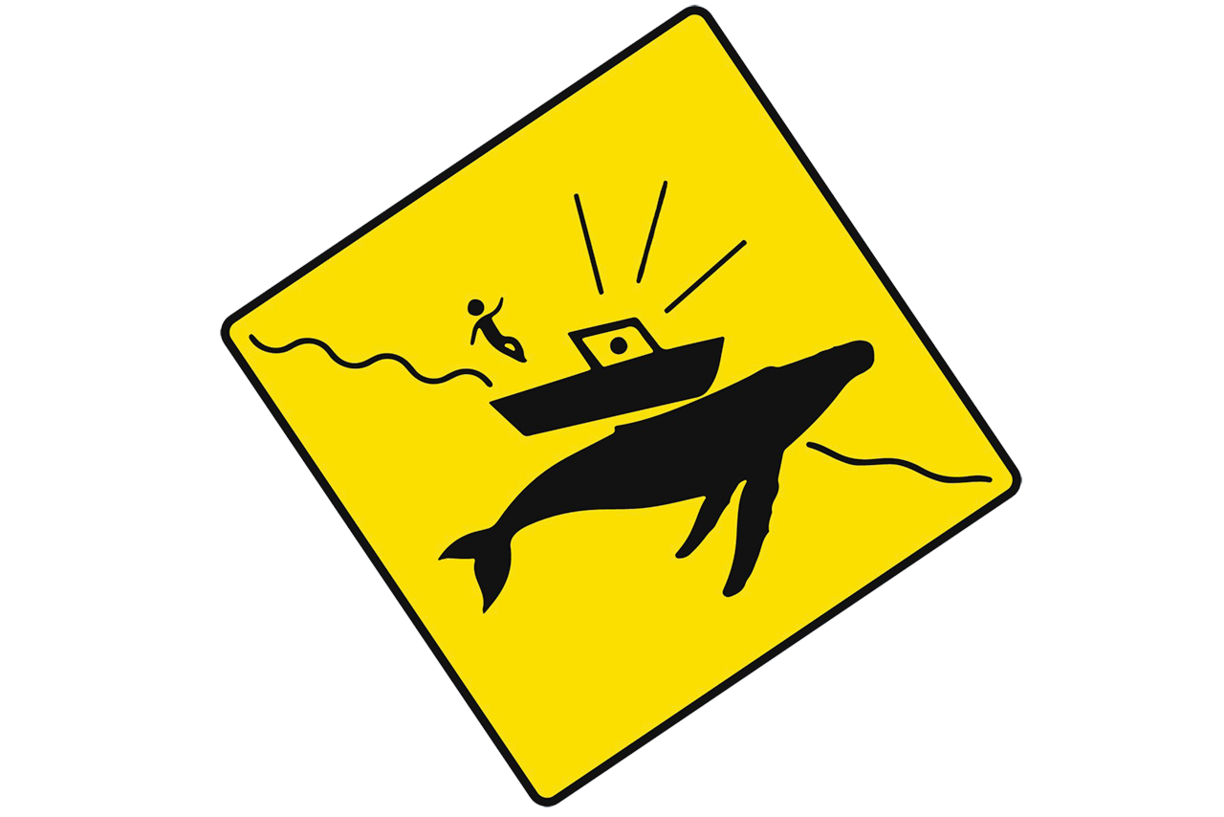
See a BLOW? Go SLOW!
As a boater, it is important to remember that whales are unpredictable and could surface anywhere. They do not move in straight lines.
Stay vigilant! Just because you see a whale, it does not mean the whale can see you.
Learn more at seeablowgoslow.org
Meet Ocular
Ocular (a.k.a. BCX1705) was born in 2016 to a mother named BCY0177 a.k.a. Slash1. After spending the winter months in Hawaii2 where he was born, Ocular migrates to the Salish Sea each and every spring, especially the upper Strait of Georgia around Denman and Hornby Islands. He is here to feed on the riches of this ecosystem, like dense clouds of krill and small schooling fish, of which he can eat 1.5 tons (1500 kg) each day. Ocular is part of the exciting legacy of “The Humpback Comeback” in the Salish Sea, being a second-generation whale.
But he also serves as a cautionary tale – he has a very distinctive tail, unfortunately for the wrong reason. He was entangled in man-made materials (likely fishing gear) when he was about 3 years old. Fortunately, he survived this entanglement, but it left him with large swollen scar tissue around the base of his flukes.
1 - Humpbacks of Northern Vancouver Island 2024, Marine Education and Research Society
2 - Based on sighting provided to HappyWhale.com by the Hawaii Marine Mammal Consortium
Write-up and images provided by Tasli Shaw.

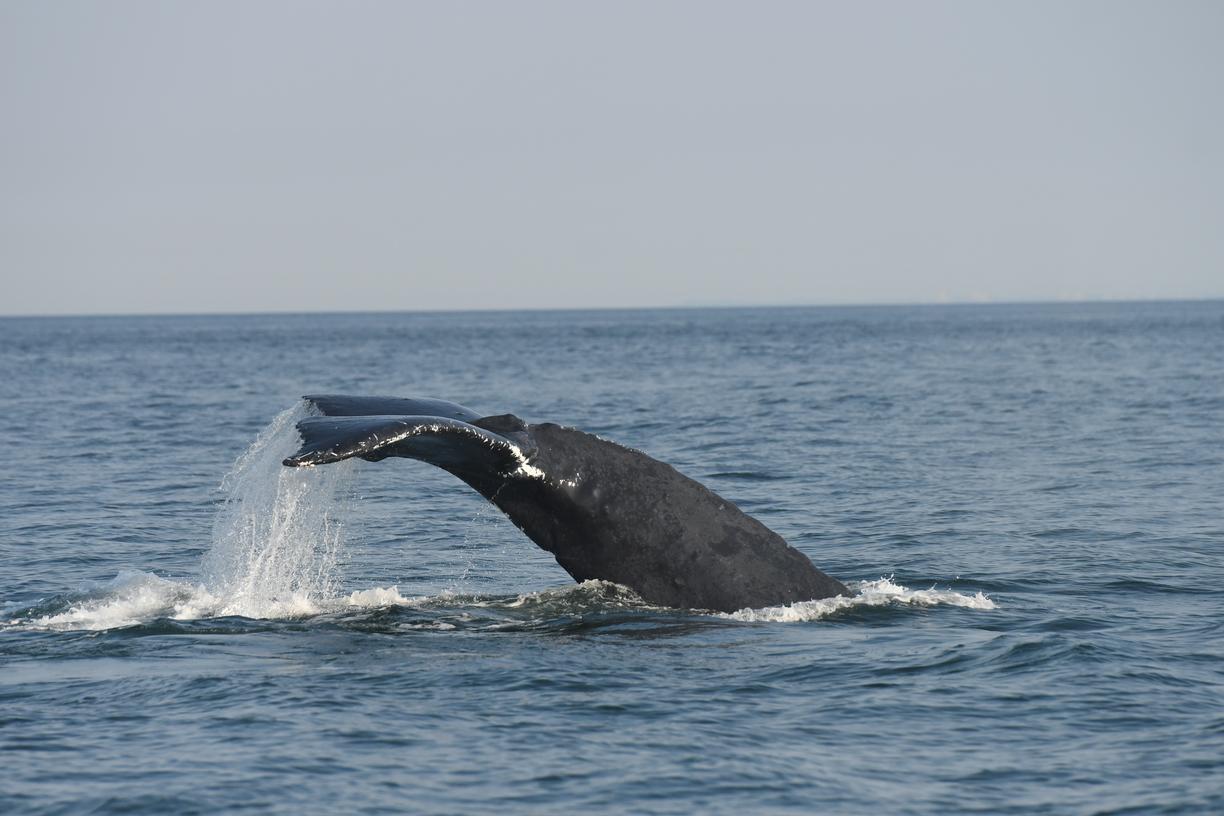
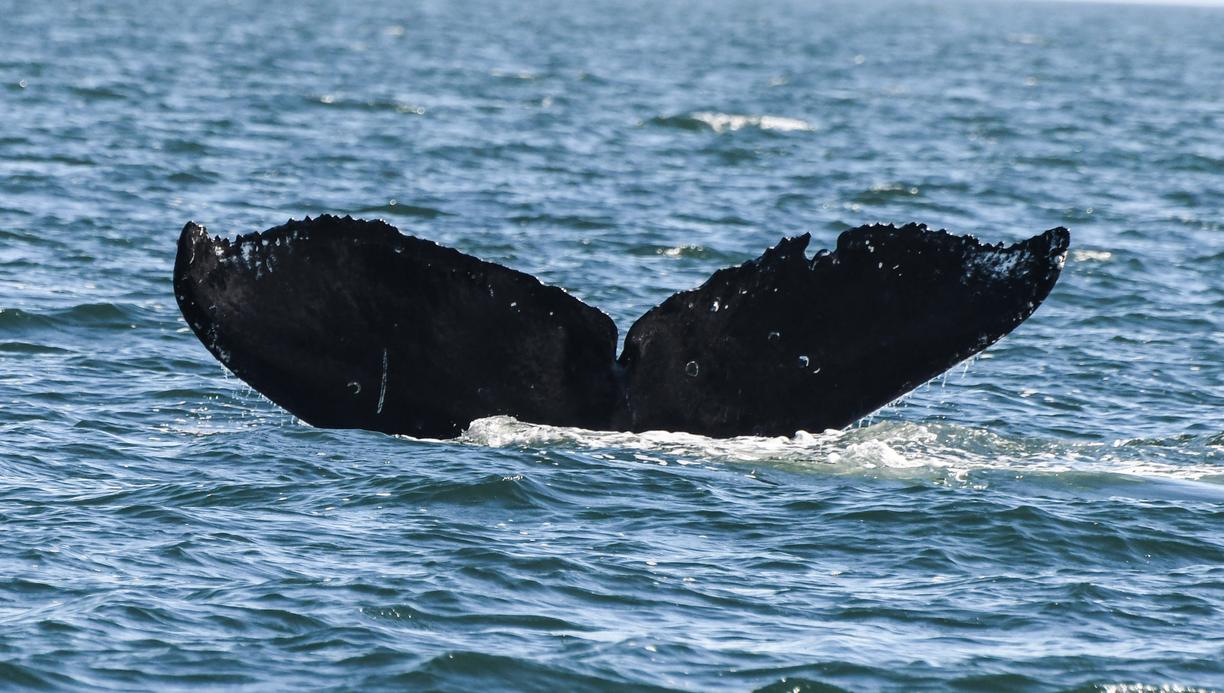
Tasli Shaw: whale researcher and artist
As a whale researcher, Tasli Shaw gets to know individual whales and their families. This unique perspective shines through her artistic practice.
Orcas
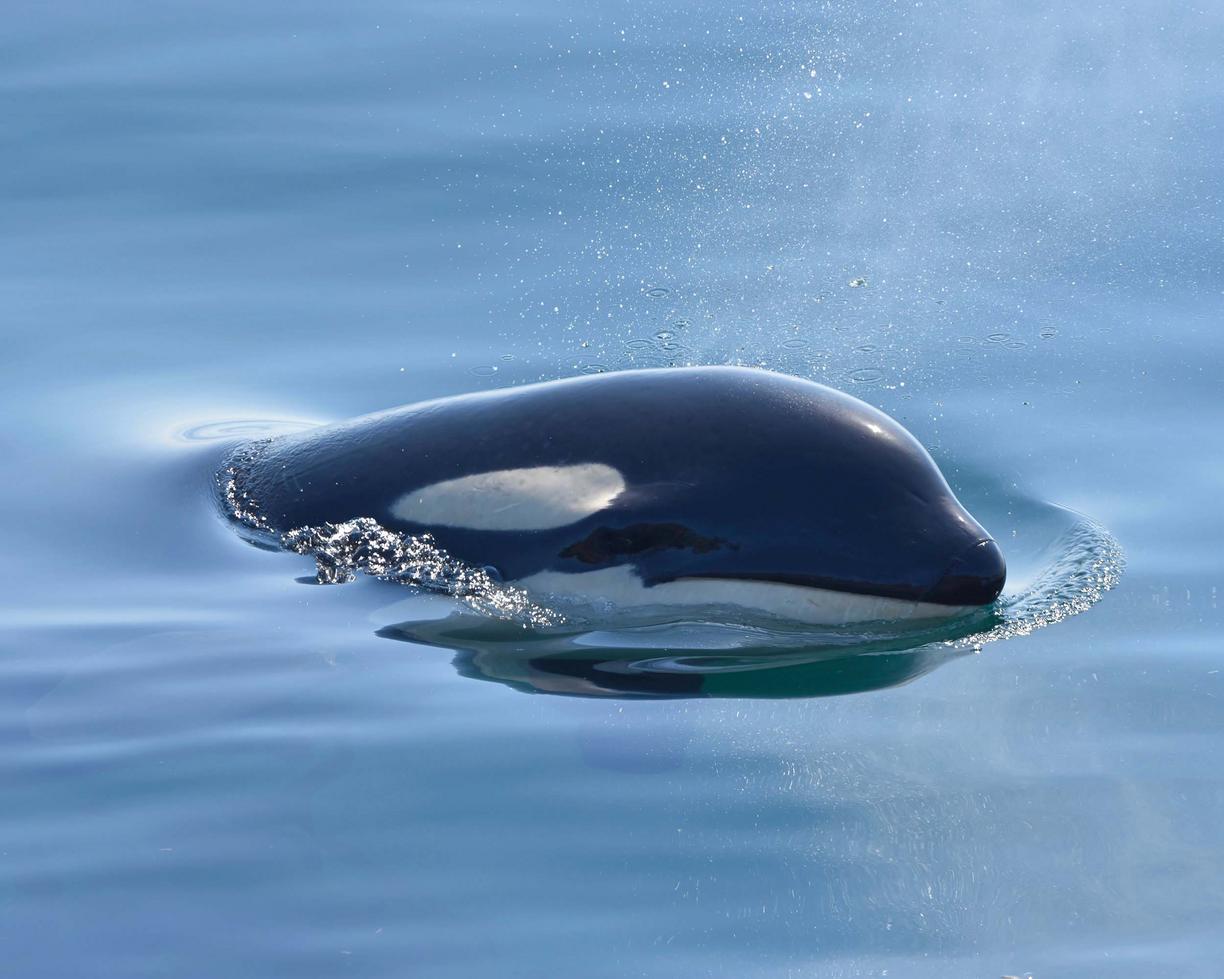
There are many to choose from, but perhaps the most famous is the Vancouver Canucks logo!

Orcas were once seen as dangerous, terrifying creatures, but in the 1960s, humans began having more of a relationship with Orcas through captivity. We now know that captivity for Orcas is inhumane, but at the time, it sparked interest in the species and their behaviour.
Today, we understand that the best way to respect and learn about Orcas is to view them from afar in their natural habitat.
Learn more from the video below.
Unfortunately, the era of capturing Orcas in the 1960s and 1970s had a lasting impact on the number of Southern Resident Killer Whales in the Salish Sea.
Dozens of individuals were taken out of the wild during this time, and today, there are only around 80 individuals left.
There are two types of Orcas in the Salish Sea
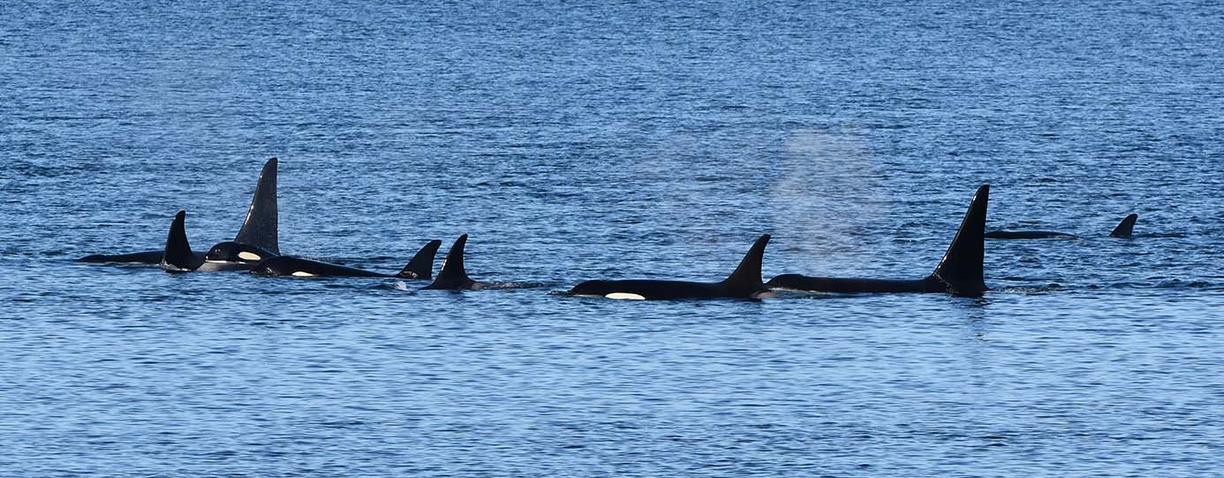
There are Resident Killer Whales and Transient, or Bigg’s, Killer Whales.
Both types of Orcas travel together in “matrilineal” families. This means that family lines follow the mother’s lineage.
Resident Whales travel in groups of multiple separate matrilines, called “Pods”, while Bigg’s Whales travel together with members of a single matriline.
There are both Southern Resident Whales and Northern Resident Whales along BC's coast. Southern Residents are more common in and around Vancouver Island, including in Baynes Sound. Northern Residents may occasionally come as far south as the Salish Sea, but they are more common along the west coast of Vancouver Island and further north.
Southern resident whales
J-Pod Orcas
Have you heard of J-Pod? This pod is well-known on the BC Coast, because Southern Residents travelling in this group spend a lot of time in our waters and have been well researched. Learn more about J-Pod on the Orca Behavior Institute website.
Bigg's whales
T18 Orcas
One of the Bigg’s matrilines found in the Salish Sea has been dubbed the “T18s” after their oldest living member. This family includes a whale scientists call T18 or “Esperanza”. Esperanza was born around 1955, making her one of the oldest Bigg’s killer whales! Learn more about this family on the Orca Behavior Institute website.
Orca tracking
The main way that orcas are tracked is through visual sightings. The Orca Behavior Institute releases monthly and yearly maps of orca sightings for both Bigg's Whales and Southern Residents based on community scientists reports from throughout the Salish Sea.
Based on the maps below, which kind of whales were more likely to be spotted in Baynes Sound in 2025?
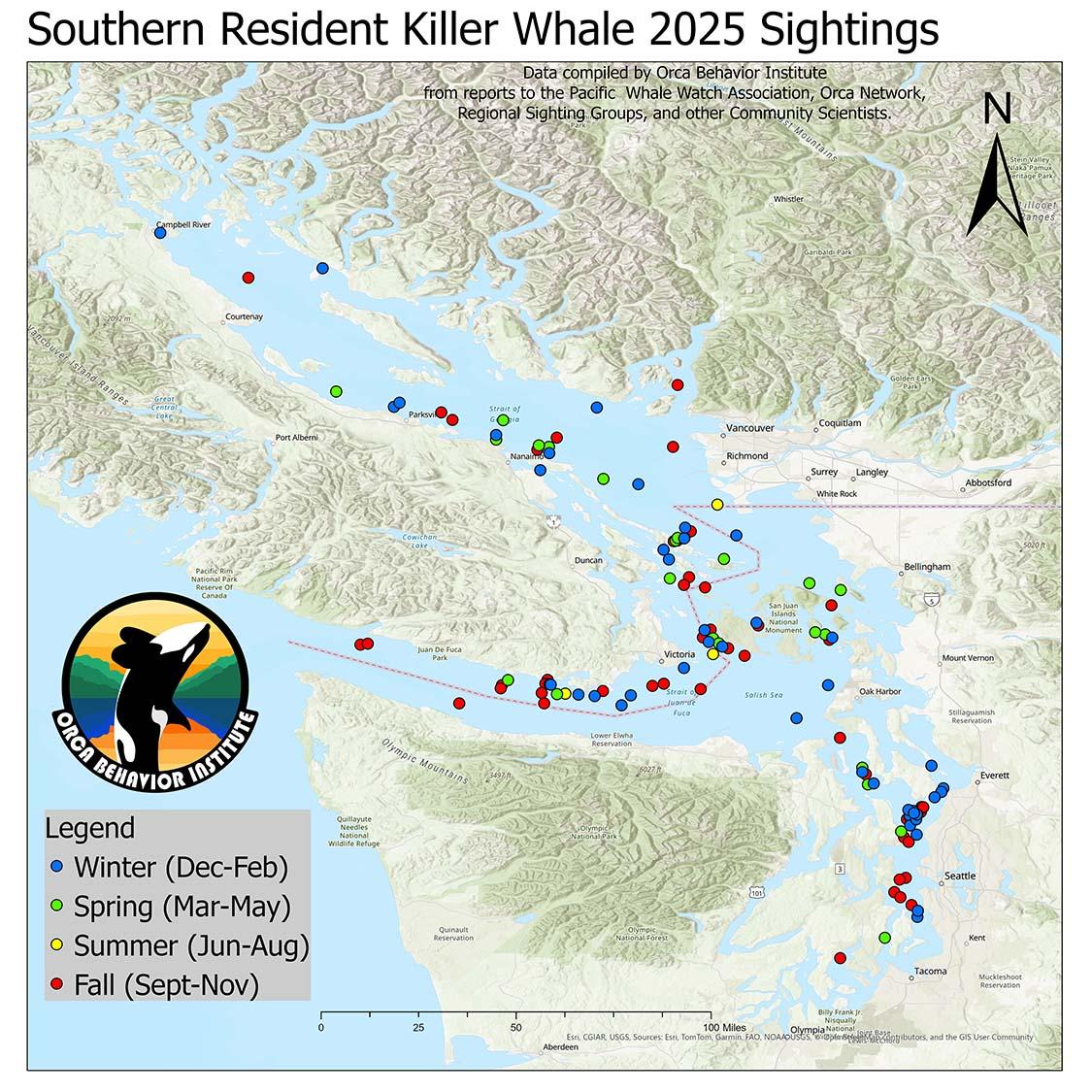
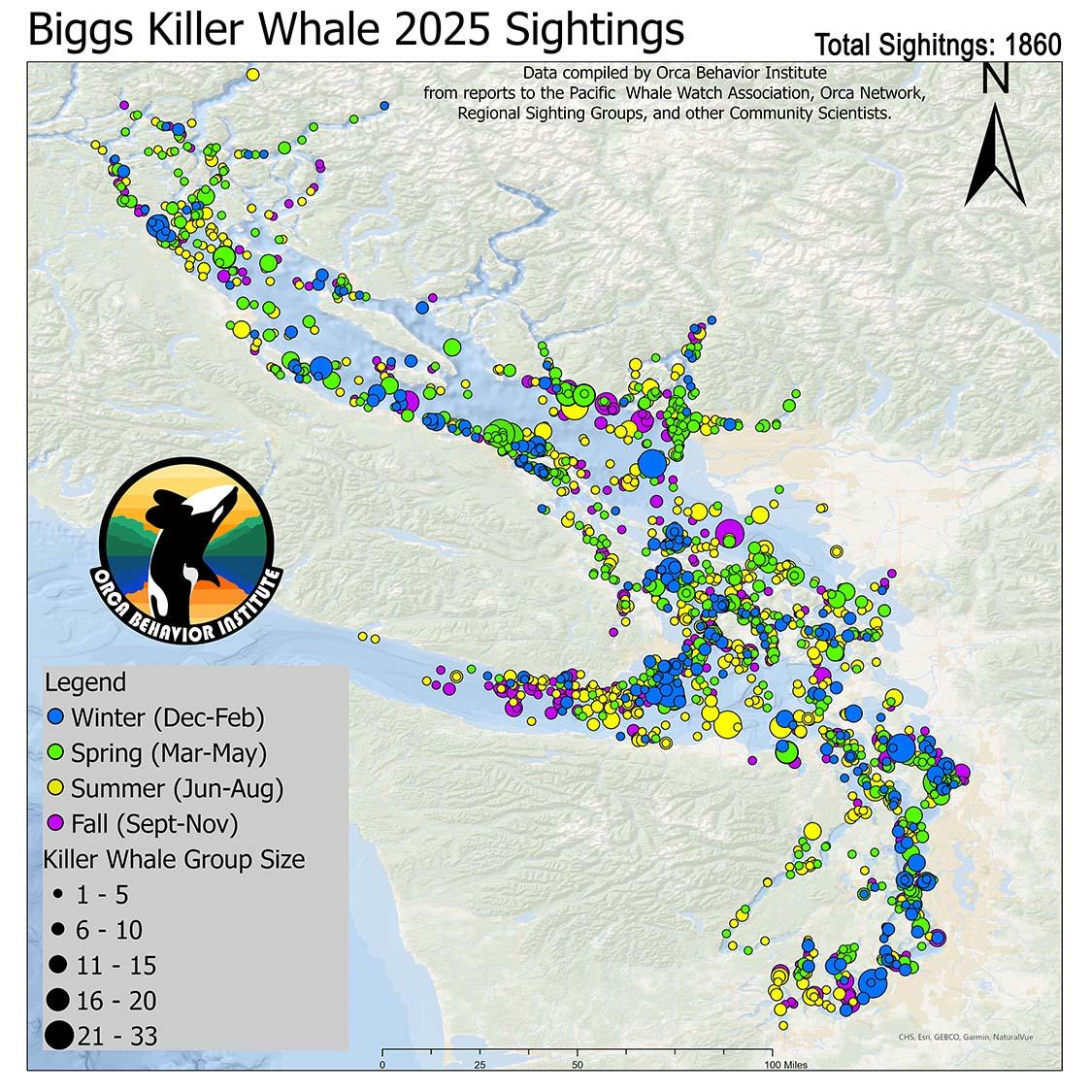
Check the most recent maps from the Orca Behavior Institute to see if there were any sightings around Baynes Sound this month.
Research papers
These papers are not Baynes Sound specific but are relevant to the Salish Sea. The whale populations that pass-through Baynes Sound may be reflected in these studies.
Burnham, R. E., Vagle, S., O’Neill, C., & Trounce, K. (2021). The Efficacy of Management Measures to Reduce Vessel Noise in Critical Habitat of Southern Resident Killer Whales in the Salish Sea. Frontiers in Marine Science, 8, 664691.
Burnham, R., Vagle, S., Thupaki, P., & Thornton, S. (2023). Implications of wind and vessel noise on the sound fields experienced by southern resident killer whales Orcinus orca in the Salish Sea. Endangered Species Research, 50, 31–46.
Cheeseman, T., Barlow, J., Acebes, J. M., Audley, K., Bejder, L., Birdsall, C., Bracamontes, O. S., Bradford, A. L., Byington, J., Calambokidis, J., Cartwright, R., Cedarleaf, J., Chavez, A. J. G., Currie, J., De Castro, R. C., De Weerdt, J., Doe, N., Doniol-Valcroze, T., Dracott, K., … Clapham, P. (2024). Bellwethers of change: Population modelling of North Pacific humpback whales from 2002 through 2021 reveals shift from recovery to climate response. Royal Society Open Science, 11(2), 231462.
Cheeseman, T., Southerland, K., Acebes, J. M., Audley, K., Barlow, J., Bejder, L., Birdsall, C., Bradford, A. L., Byington, J. K., Calambokidis, J., Cartwright, R., Cedarleaf, J., Chavez, A. J. G., Currie, J. J., De Weerdt, J., Doe, N., Doniol-Valcroze, T., Dracott, K., Filatova, O., … Clapham, P. (2023). A collaborative and near-comprehensive North Pacific humpback whale photo-ID dataset. Scientific Reports, 13(1), 10237.
Clarke, C., Stredulinsky, E., Toews, S., Rani, V., Bouvier-Brown, M., Smyth, D., Joy, R., & Thornton, S. (2024). Assessing the efficacy of ecological reserves: Killer whale beach rubbing behaviour and vessel disturbance. Endangered Species Research, 53, 555–567.
Cominelli, S., Devillers, R., Yurk, H., MacGillivray, A., McWhinnie, L., & Canessa, R. (2018). Noise exposure from commercial shipping for the southern resident killer whale population. Marine Pollution Bulletin, 136, 177–200.
Fraser, M. D., McWhinnie, L. H., Canessa, R. R., & Darimont, C. T. (2020). Compliance of small vessels to minimum distance regulations for humpback and killer whales in the Salish Sea. Marine Policy, 121, 104171.
Giles, D. A., Teman, S. J., Ellis, S., Ford, J. K. B., Shields, M. W., Hanson, M. B., Emmons, C. K., Cottrell, P. E., Baird, R. W., Osborne, R. W., Weiss, M., Ellifrit, D. K., Olson, J. K., Towers, J. R., Ellis, G., Matkin, D., Smith, C. E., Raverty, S. A., Norman, S. A., & Gaydos, J. K. (2024). Harassment and killing of porpoises (“phocoenacide”) by fish‐eating Southern Resident killer whales (Orcinus orca). Marine Mammal Science, 40(2), e13073.
Hendricks, B., Pine, M. K., Baer, G., Welton, M., Symonds, H. K., Dakin, D. T., Alidina, H. M., Picard, C. R., & Wray, J. (2025). Quantifying vessel noise and acoustic habitat loss in marine soundscapes. Marine Pollution Bulletin, 219, 118150.
Lo, C. F., Nielsen, K. A., Ashe, E., Bain, D. E., Mendez-Bye, A., Reiss, S. A., Bogaard, L. T., Collins, M. S., & Williams, R. (2022). Measuring speed of vessels operating around endangered southern resident killer whales (Orcinus orca) in Salish Sea critical habitat. Marine Pollution Bulletin, 174, 113301.
McInnes, J. D., Buckmaster, J. N., Cullen, K. D., Mathieson, C. R., & Tawse, J. P. (2020). Intentional Stranding by Mammal-Hunting Killer Whales (Orcinus orca) in the Salish Sea. Aquatic Mammals, 46(6), 556–560.
McMillan, C. J. (2014). How important are herring to humpback whales? The role of herring in meeting the energetic requirements of humpback whales in a British Columbian feeding ground [Master Thesis, Simon Fraser University].
McMillan, C. J., Towers, J. R., & Hildering, J. (2019). The innovation and diffusion of “trap‐feeding,” a novel humpback whale foraging strategy. Marine Mammal Science, 35(3), 779–796.
McWhinnie, L. H., O’Hara, P. D., Hilliard, C., Le Baron, N., Smallshaw, L., Pelot, R., & Canessa, R. (2021). Assessing vessel traffic in the Salish Sea using satellite AIS: An important contribution for planning, management and conservation in southern resident killer whale critical habitat. Ocean & Coastal Management, 200, 105479.
Nikolich, K., & Towers, J. R. (2020). Vocalizations of common minke whales (Balaenoptera acutorostrata) in an eastern North Pacific feeding ground. Bioacoustics, 29(1), 97–108.
Olson, J. K., Larson, S. E., Robertson, F. C., Miller, H., Morrigan, A., Berta, S., & Calambokidis, J. (2024). Utilizing long-term opportunistic sightings records to document spatio-temporal shifts in mysticete presence and use in the Central Salish Sea. Frontiers in Conservation Science, 5, 1401838.
Olson, J., Wood, J., Osborne, R., Barrett-Lennard, L., & Larson, S. (2018). Sightings of southern resident killer whales in the Salish Sea 1976-2014: The importance of a long-term opportunistic dataset. Endangered Species Research, 37, 105–118.
O’Mahony, É. N., Sremba, A. L., Keen, E. M., Robinson, N., Dundas, A., Steel, D., Wray, J., Baker, C. S., & Gaggiotti, O. E. (2024). Collecting baleen whale blow samples by drone: A minimally intrusive tool for conservation genetics. Molecular Ecology Resources, 24(8), e13957.
Palmer, K. J., Houweling, A., Laturnus, L., Pilkington, J., Vuibert, A. R., Wladichuk, J., & Joy, R. (2026). Population‐Level Acoustic Classification of Salish Sea Killer Whales: Integrating Biologically Informed Call Type Balancing to Build Robust Models for Conservation Monitoring. Marine Mammal Science, 42(1), e70126.
Robinson, C. V. (2026). Bridging borders: Toward alignment of environmental regulations in the Salish Sea for whale conservation. Marine Policy, 185, 106970.
Seely, E., Osborne, R. W., Koski, K., & Larson, S. (2017). Soundwatch: Eighteen years of monitoring whale watch vessel activities in the Salish Sea. PLOS ONE, 12(12), e0189764.
Shields, M. W. (2022). Commercial whale-watching reduces vessel incidents in the vicinity of killer whales in Washington State. Marine Policy, 145, 105290.
Shields, M. W. (2023). 2018–2022 Southern Resident killer whale presence in the Salish Sea: Continued shifts in habitat usage. PeerJ, 11, e15635.
Shields, M. W., Hysong-Shimazu, S., Shields, J. C., & Woodruff, J. (2018). Increased presence of mammal-eating killer whales in the Salish Sea with implications for predator-prey dynamics. PeerJ, 6, e6062.
Shields, M. W., Lindell, J., & Woodruff, J. (2018). Declining spring usage of core habitat by endangered fish-eating killer whales reflects decreased availability of their primary prey. Pacific Conservation Biology, 24(2), 189–193.
Souhaut, M., & Shields, M. W. (2021). Stereotyped whistles in southern resident killer whales. PeerJ, 9, e12085.
Stewart, J. D., Cogan, J., Durban, J. W., Fearnbach, H., Ellifrit, D. K., Malleson, M., Pinnow, M., & Balcomb, K. C. (2023). Traditional summer habitat use by Southern Resident killer whales in the Salish Sea is linked to Fraser River Chinook salmon returns. Marine Mammal Science, 39(3), 858–875.
Towers, J. R., Malleson, M., McMillan, C. J., Cogan, J., Berta, S., & Birdsall, C. (2018). Occurrence of Fin Whales (Balaenoptera physalus) Between Vancouver Island and Continental North America. Northwestern Naturalist, 99(1), 49–57.
Towers, J. R., McMillan, C. J., Malleson, M., Hildering, J., Ford, J. K. B., & Ellis, G. M. (2023). Seasonal movements and ecological markers as evidence for migration of common minke whales photo-identified in the eastern North Pacific. J. Cetacean Res. Manage., 13(3), 221–229.
Towers, J. R., McMillan, C. J., & Piercey, R. S. (2019). Sighting rates and prey of Minke Whales (Balaenoptera acutorostrata) and other cetaceans off Cormorant Island, British Columbia. The Canadian Field-Naturalist, 133(2), 144.
Wray, J., O’Mahony, É. N., Baer, G., Robinson, N., Dundas, A., Gaggiotti, O. E., Rendell, L., & Keen, E. M. (2026). The diffusion of cooperative and solo bubble net feeding in Canadian Pacific humpback whales. Proceedings of the Royal Society B: Biological Sciences, 293(2063), 1–12.