
What is seaweed?
Seaweed are also called macroalgae. Macroalgae is a combination of the words macroscopic and algae.
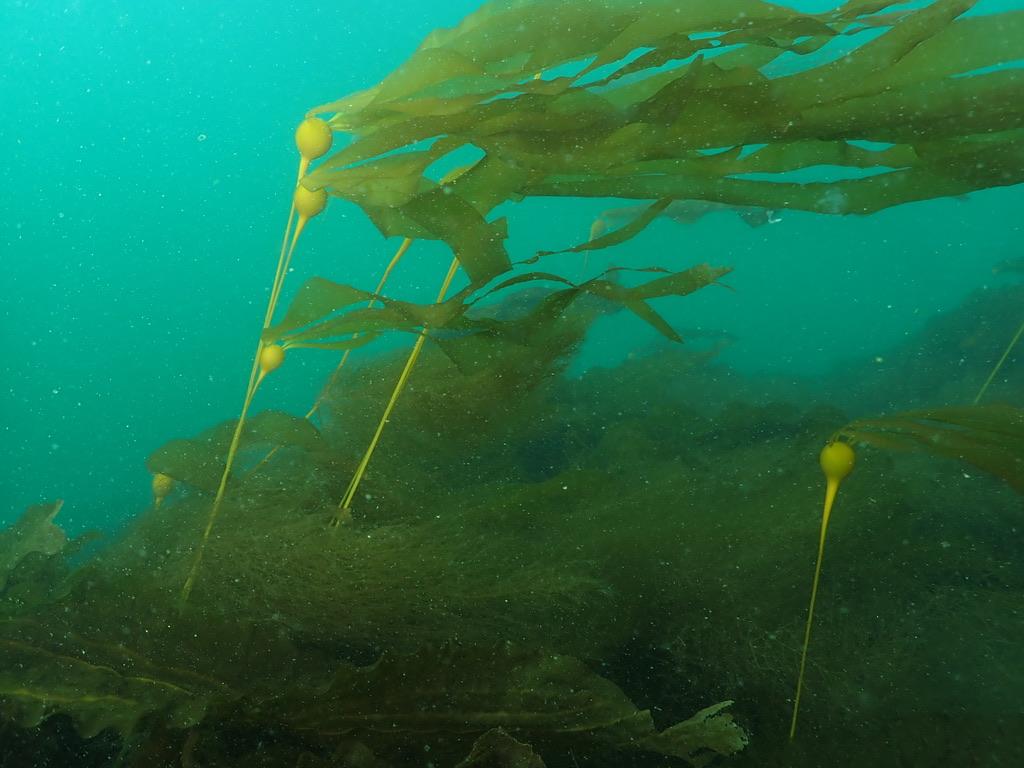
Macroscopic
If you heard the word macroscopic and thought it means big, you are on the right track. Macroscopic means big enough to see without a microscope. That is a huge spectrum of sizes! Seaweed includes many species of algae, big and small.
Algae
Algae are not plants, but they use similar processes. Algae and plants both use photosynthesis to turn sunlight and nutrients into food. Algae have simpler structures than plants though. Algae don’t have roots, stems, or leaves. They also don't have systems needed to move nutrients between these structures. Algae are simpler than plants because they have water and nutrients all around them. They never needed to develop the complex structures required for life on land.
What happened to the kelp forests near Baynes Sound?
If you spend time around Vancouver Island, you have probably seen bull kelp washed up on the shore. Bull kelp is an important species because it creates a habitat for marine animals, like trees do on land. Until the 1970s, there were extensive bull kelp forests around Cape Lazo and Denman Island. Today, they are all gone. The kelp forests lost once covered 550 hectares. That's a bigger area than Stanley Park.
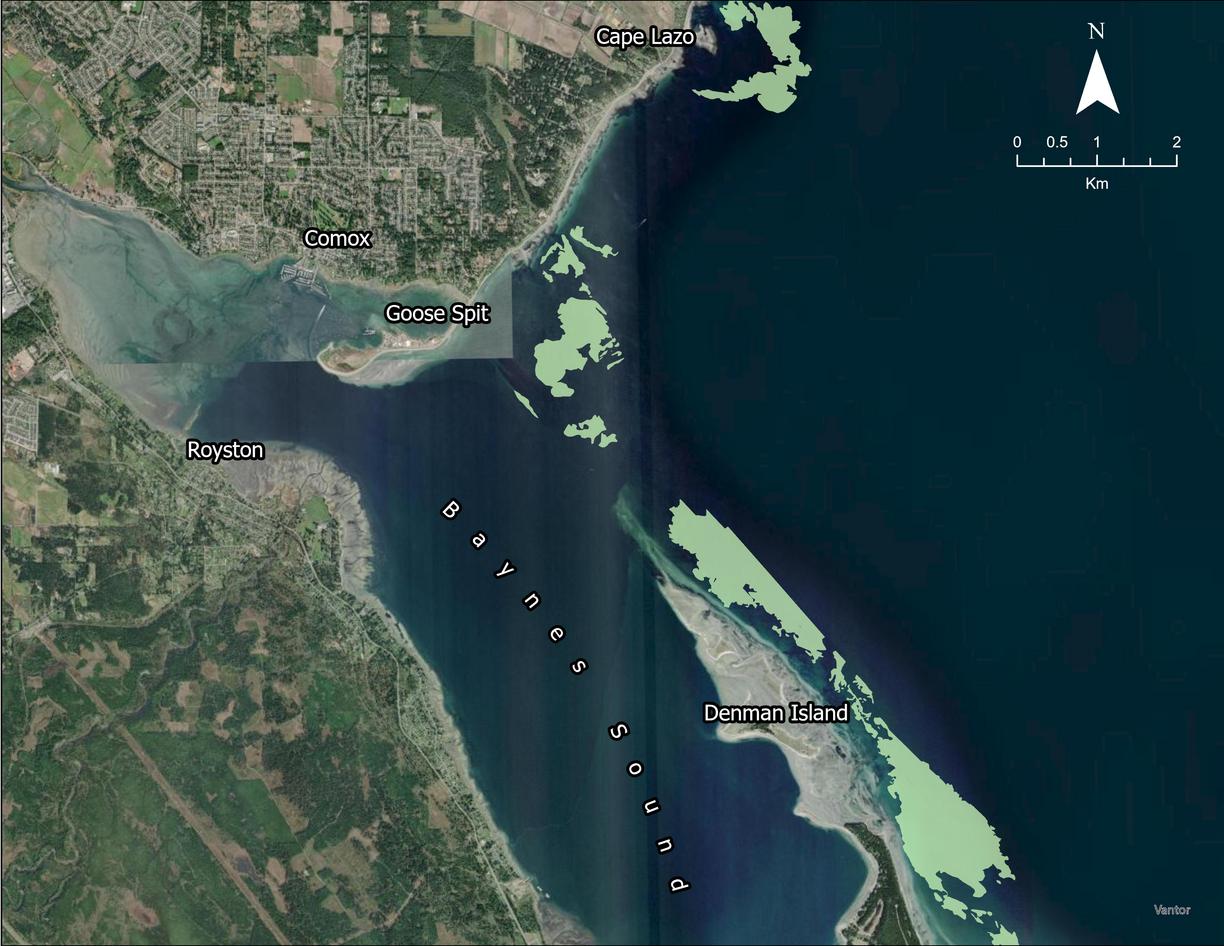
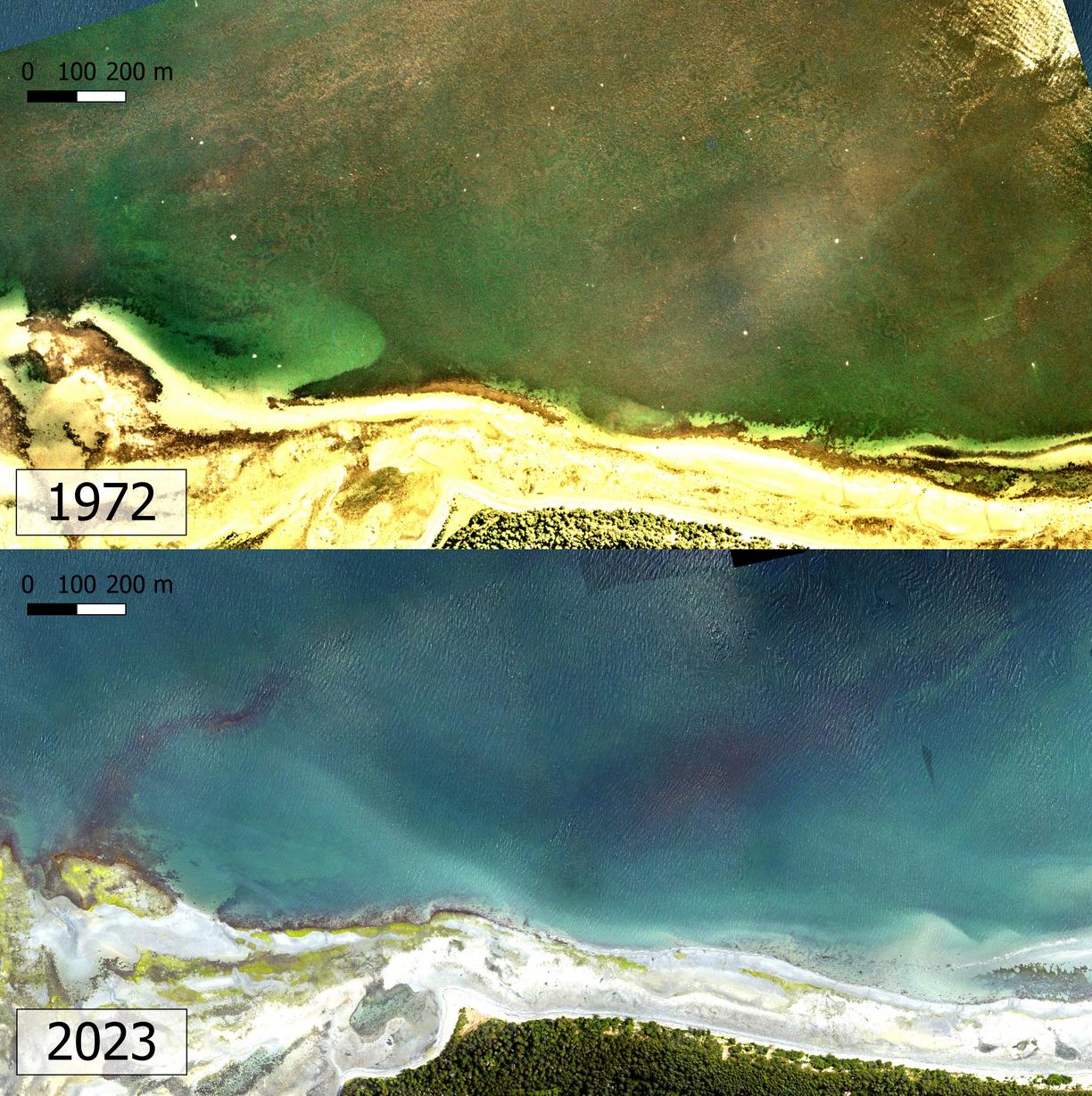
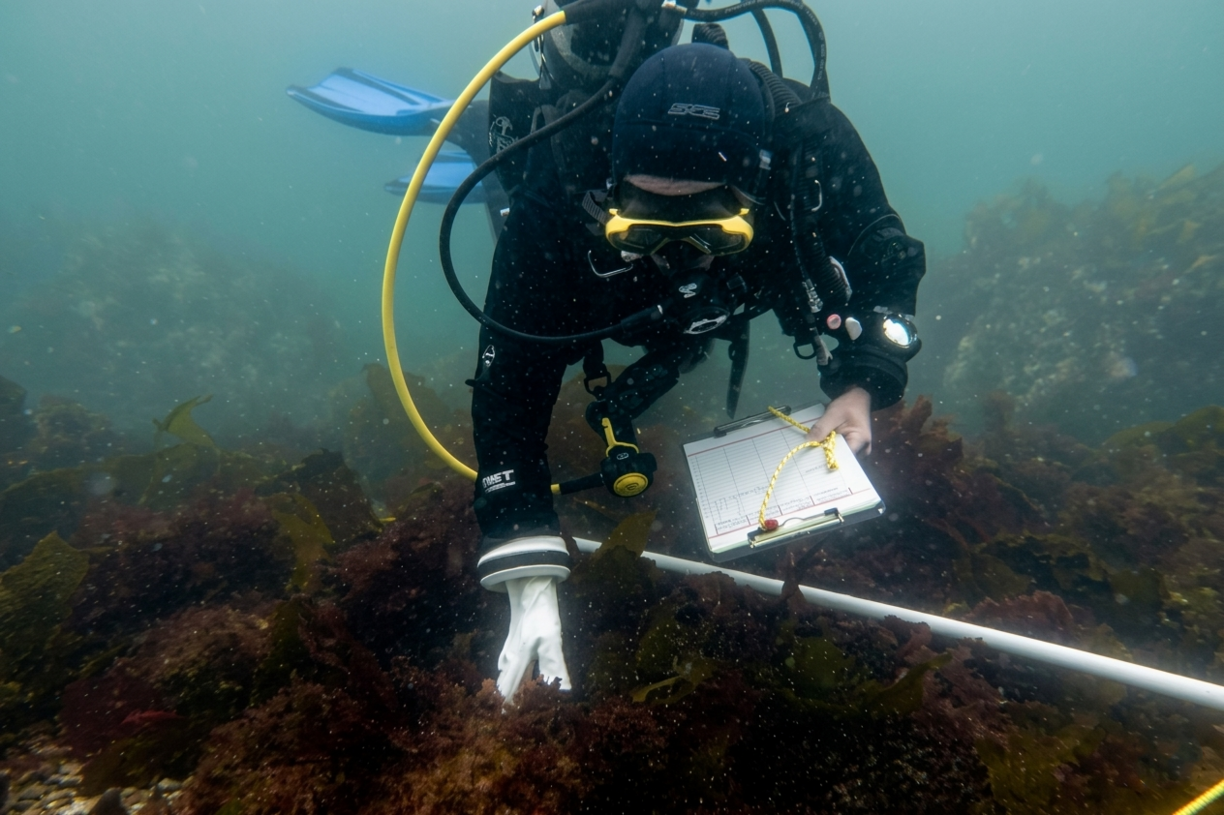
Brian Timmer’s research uses historic aerial photos from Fisheries and Oceans Canada and current satellite imagery to examine how kelp distributions have changed over time. It isn’t clear exactly when these kelp beds disappeared, but Brian’s research suggests that marine heatwaves in the 1970s wiped them out.
Check out the research paper:
Timmer, B., Reshitnyk, L. Y., Neufeld, C. J., & Baum, J. K. (2026). Historical data reveal extirpation of foundation species and kelp forest community deborealization in a coastal hotspot. Ecological Applications, 36(3).
Meet Brian Timmer
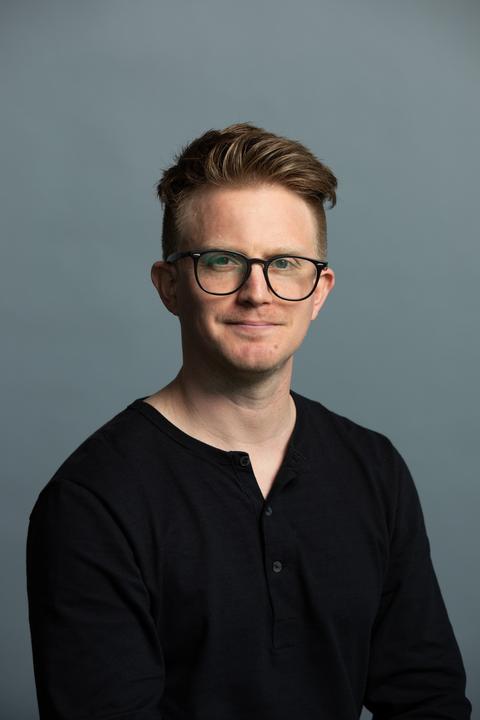
“My research brings together the past, present, and future of kelp forests.”
- Brian Timmer
My work with kelp forests began when I was still an undergraduate at Vancouver Island University, during which time I was also a SCUBA instructor in Nanaimo. My favourite thing to do while diving was hanging out in the bull kelp forests around Nanoose, but during the first year of my undergraduate degree, the 'blob' heatwave hit the coast of BC and within a single summer all of the bull kelp at my favourite dive sites disappeared completely. I got involved with MABRRI and working with kelp restoration and then did an MSc in remote sensing of kelp at UVic and am now doing a PhD at UVic focused on historical ecology and restoration of kelp forests. I work with an organization called the Kelp Rescue Initiative, but we closely collaborate with Deep Bay marine field station, Project watershed, North Island College, and Bamfield Marine Sciences center as well as numerous First Nations across the different regions we are operating in.
The Spectral Lab at UVic
Did you know?
Satellites have been taking pictures of the earth for over 50 years.
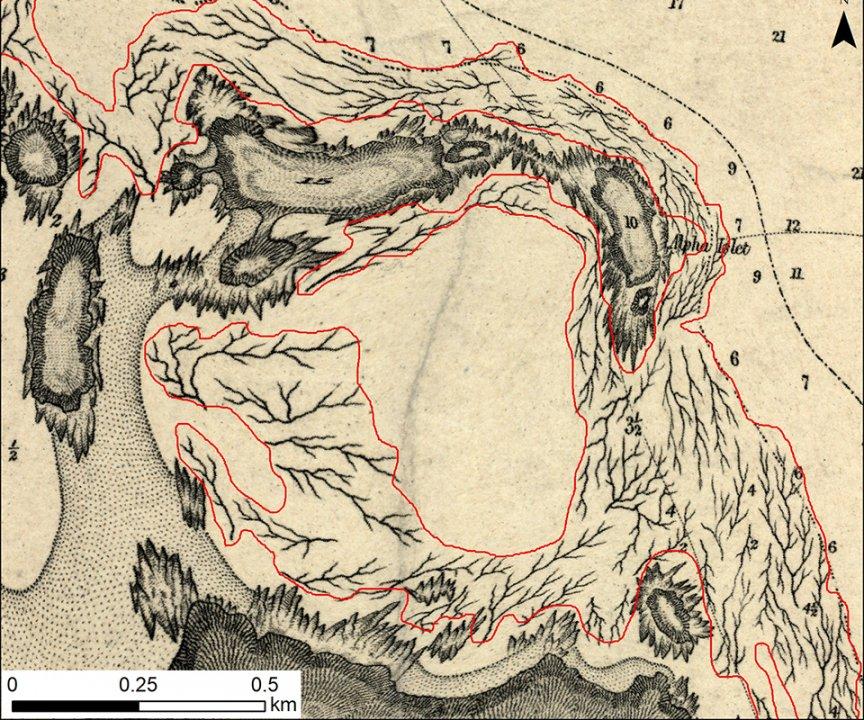
Scientists with the Spectral Lab use multiple types of maps to look into the past. Before there was satellite imagery and aerial photos, there were hand drawn navigation maps. Kelp forests were a hazard for boats, so British navigators recorded their locations. The Spectral Lab uses maps from as early as 1858 to study the historic distribution of kelp forests. Learn more from this CBC Article.
Check out this video to learn more about the Spectral Lab's kelp mapping research projects.
Meet Alejandra Mora-Soto
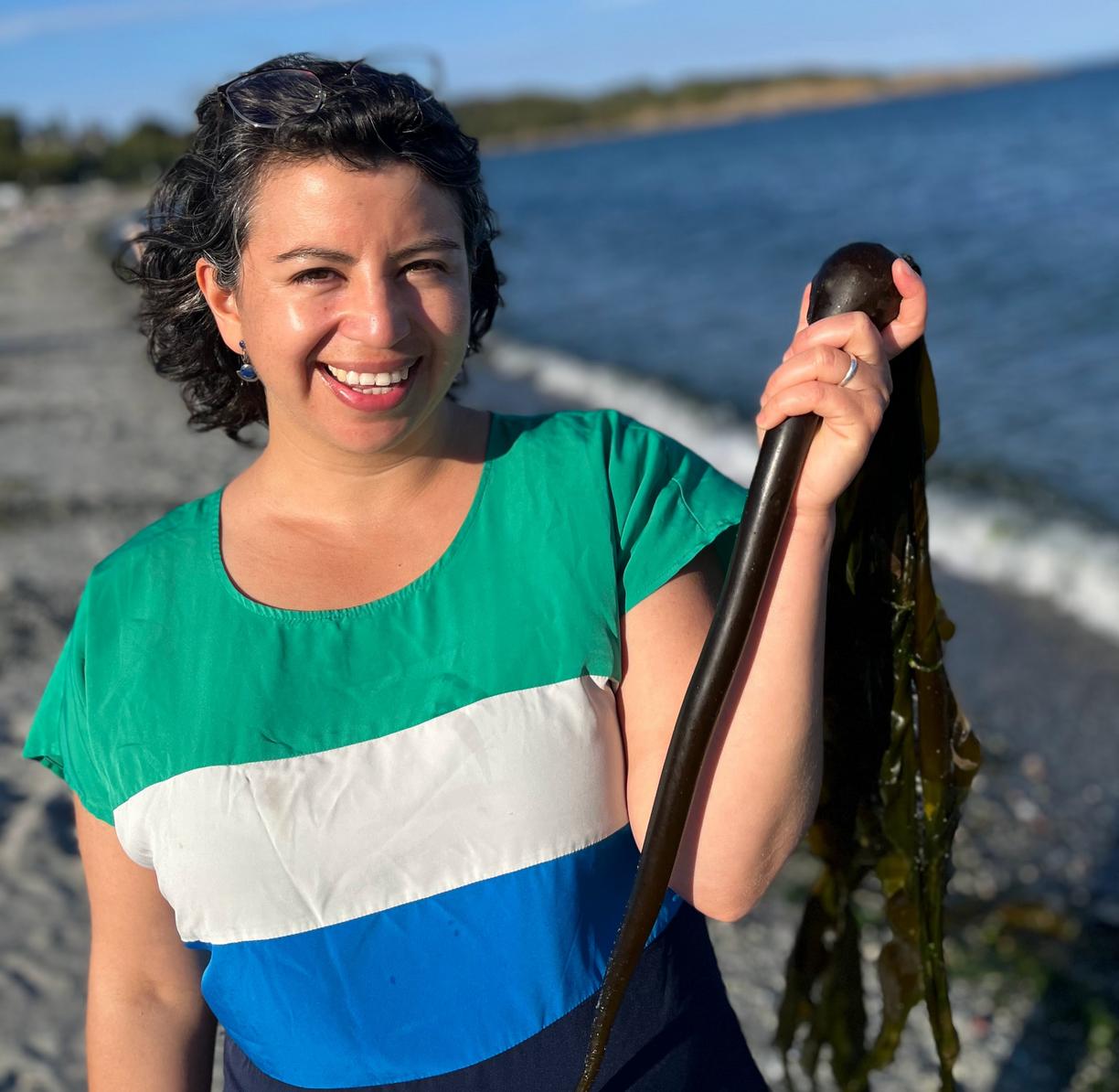
I am a Chilean geographer. I first got into kelp when I read The Voyage of the Beagle by Charles Darwin and learned that the kelp forests of South America were vital ecosystems teeming with life. Since then, I’ve dedicated my professional life to mapping their extent, changes, and persistence across Chilean Patagonia (for my PhD), and British Columbia, as a postdoctoral researcher at the Spectral Lab at UVIC. By integrating local observations, drone imagery, and satellite data with abiotic patterns, I analyze the main trends in these ecosystems to inform strategic management decisions.
Rescuing the kelp
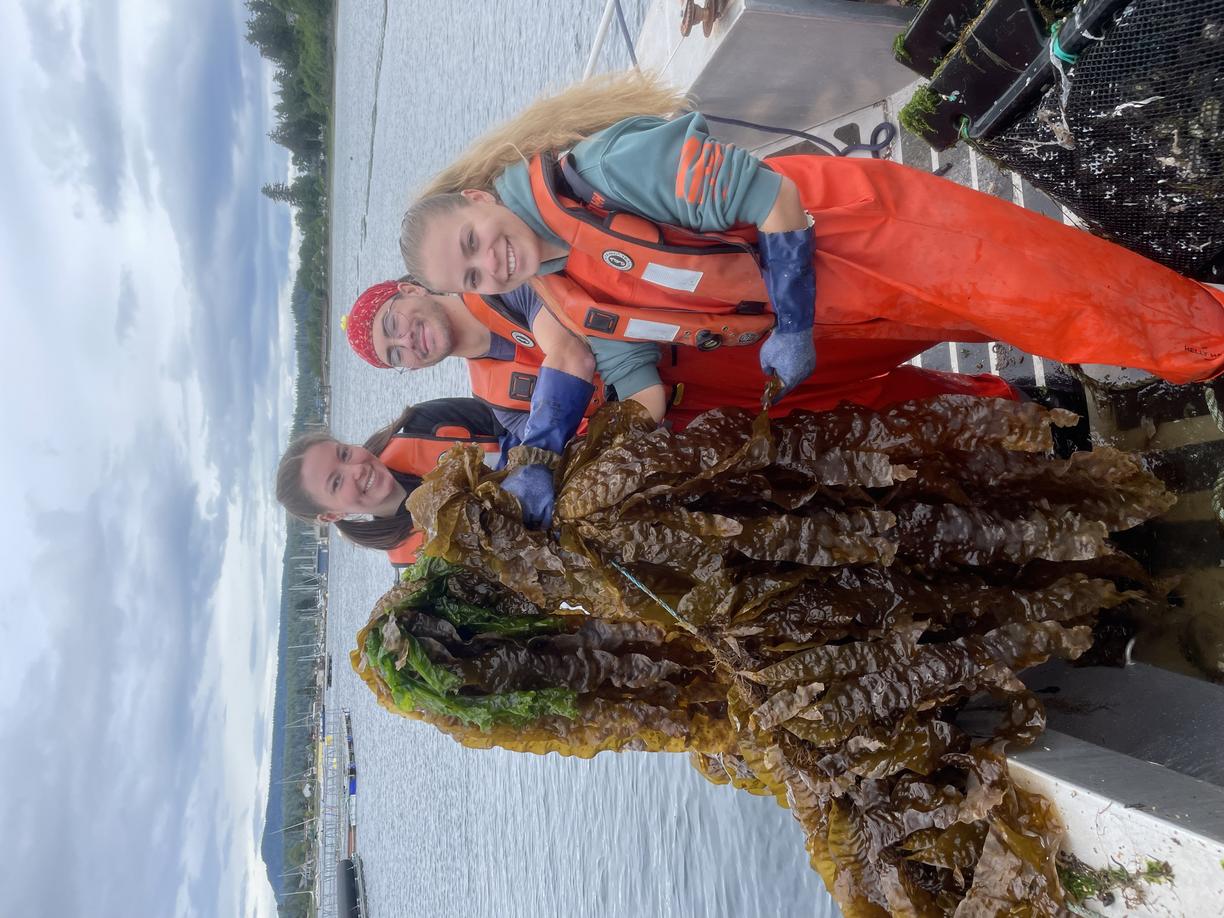
The Kelp Rescue Initiative is working on restoring kelp forests that have been lost. But restoration isn’t as easy as just planting seeds on the seafloor. This is where the Deep Bay Marine Field Station comes into the picture. Bull kelp is grown at the station to restore forests on the BC coast.
Commercial seaweed harvest
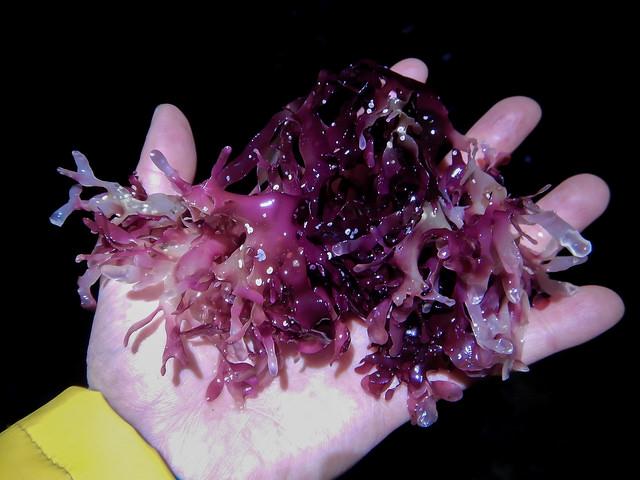
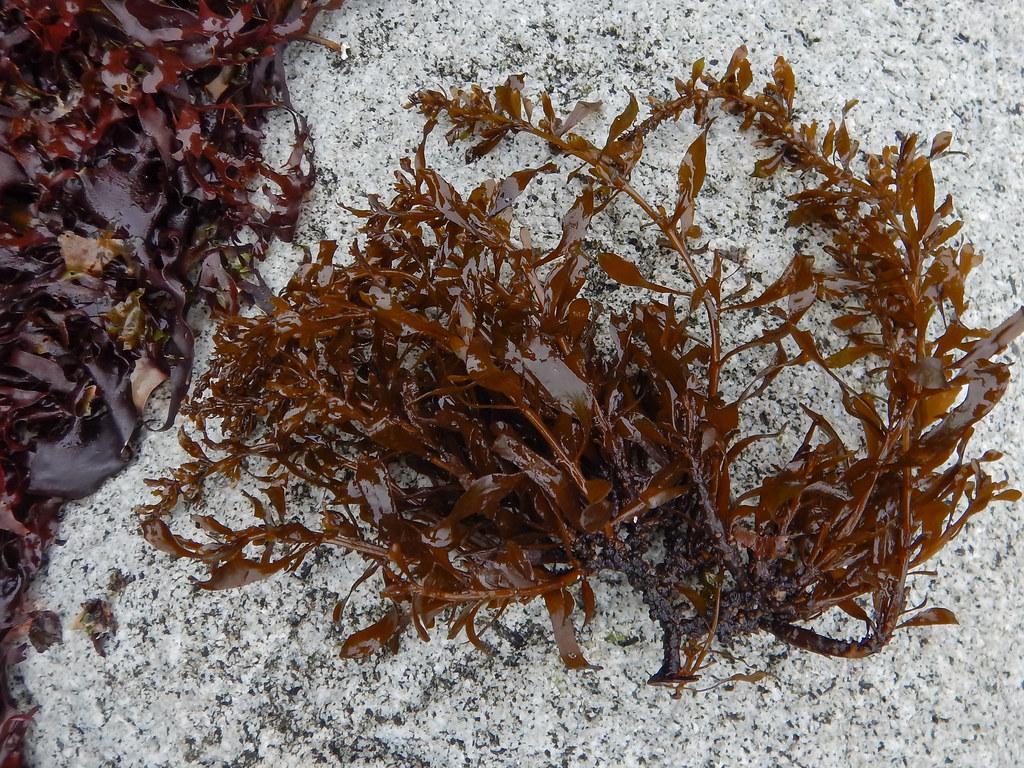
Seaweed is also foraged from beaches in Baynes Sound for commercial use. One commercially valuable species is Mazzaella japonica. This red algae species is valuable because it contains carrageenan. Carrageenan is a thickening agent used in food, cosmetics, and pharmaceuticals. This non-native species is foraged when it washes up on the beaches around Baynes Sound.
In the 2010's, researchers studied the extent of this harvest. They found that seaweed harvested was only a small fraction of the total amount that washed up on the shore.
Learn more about the 2014-2015 seaweed drift monitoring study from Deep Bay.
Research papers
Birtwell, I. K. (2019). Seaweed Harvesting: A controversial new industry on the east coast of Vancouver Island, British Columbia. In L. Bendell, P. Gallaugher, S. McKeachie, & L. Wood (Eds.), Stewarding the Sound (1st ed., pp. 61–78). CRC Press.
Costa, M., Le Barona N., Tenhunen, K., Nephin, J., Willis P., Mortimorc, J.P, Dudas S., Rubidge E. (2020). Historical distribution to kelp forests on the coast of British Columbia: 1858-1956. Journal of Applied Geography. 120, 102230.
Hahn, J. L., Van Alstyne, K. L., Gaydos, J. K., Wallis, L. K., West, J. E., Hollenhorst, S. J., Ylitalo, G. M., Poppenga, R. H., Bolton, J. L., McBride, D. E., & Sofield, R. M. (2022). Chemical contaminant levels in edible seaweeds of the Salish Sea and implications for their consumption. PLOS ONE, 17(9), e0269269.
Holden, J. J., Dudas, S. E., & Juanes, F. (2016). Is commercial harvesting of beach-cast seaweed ecologically sustainable? Integrated Environmental Assessment and Management, 12(4), 825–827.
Holden, J. J., Kingzett, B. C., MacNeill, S., Smith, W., Juanes, F., & Dudas, S. E. (2018). Beach-cast biomass and commercial harvesting of a non-indigenous seaweed, Mazzaella japonica, on the east coast of Vancouver Island, British Columbia. Journal of Applied Phycology, 30(2), 1175–1184.
Mora-Soto, A., Schroeder, S., Gendall, L., Wachmann, A., Narayan, G., Read, S., Pearsall, I., Rubidge, E., Lessard, J., Martell, K., & Costa, M. (2024). Back to the past: Long-term persistence of bull kelp forests in the Strait of Georgia, Salish Sea, Canada. Frontiers in Marine Science, 11, 1446380.
Pawluk, K. A. (2016). Impacts and interactions of two non-indigenous seaweeds Mazzaella japonica (Mikami) Hommersand and Sargassum muticum (Yendo) Fensholt in Baynes Sound, British Columbia [Dissertation, University of Victoria].
Starko, S., Timmer, B., Reshitnyk, L., Csordas, M., McHenry, J., Schroeder, S., Hessing-Lewis, M., Costa, M., Zielinksi, A., Zielinksi, R., Cook, S., Underhill, R., Boyer, L., Fretwell, C., Yakimishyn, J., Heath, W., Gruman, C., Hingmire, D., Baum, J., & Neufeld, C. (2024). Local and regional variation in kelp loss and stability across coastal British Columbia. Marine Ecology Progress Series, 733, 1–26.
Timmer, B., Reshitnyk, L. Y., Neufeld, C. J., & Baum, J. K. (2026). Historical data reveal extirpation of foundation species and kelp forest community deborealization in a coastal hotspot. Ecological Applications, 36(3), e70223.